

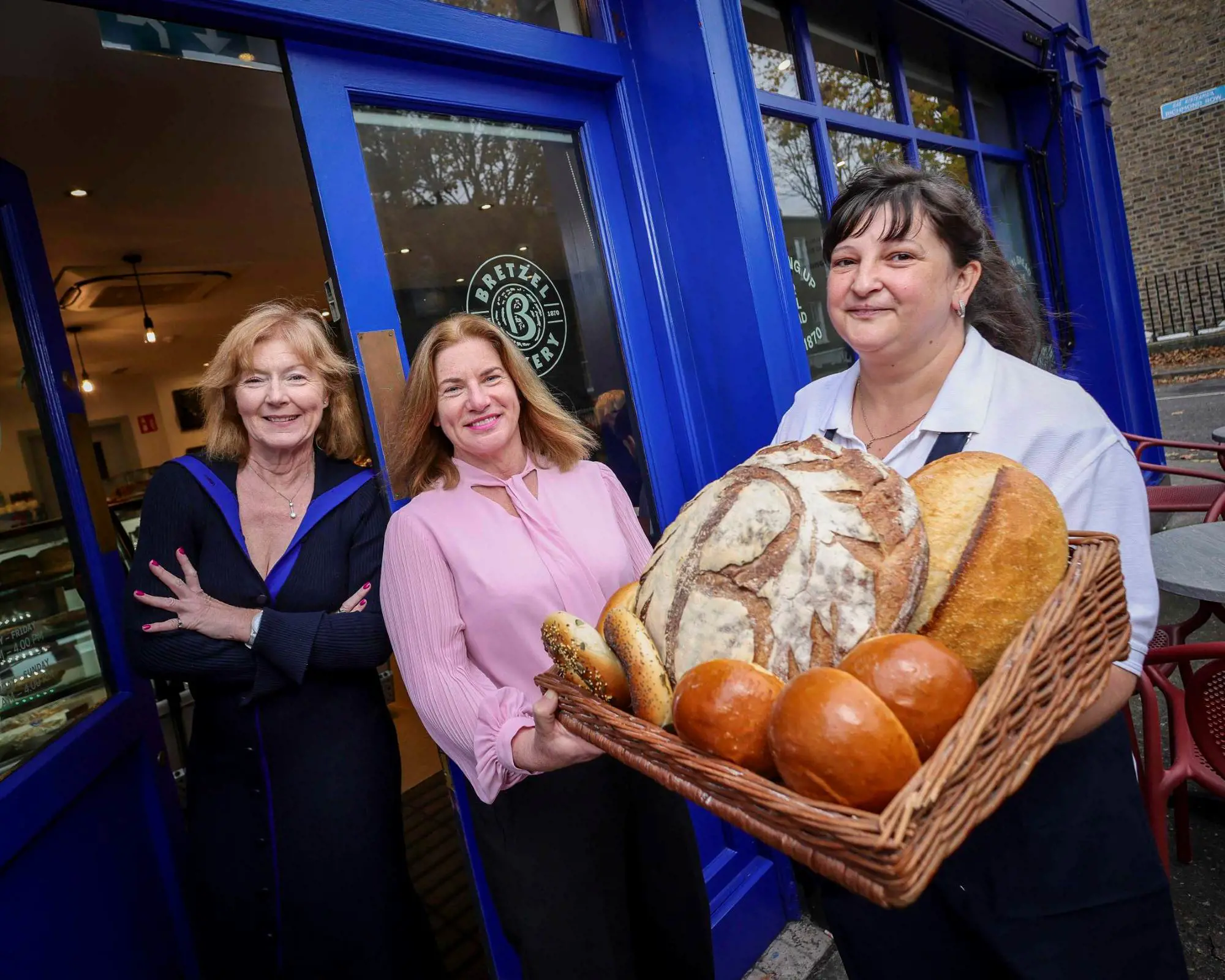
Image: Pictured at Bretzel Bakery, Portobello, Dublin for the launch of the 2026 Bord Bia Irish Foodservice Market Insights Report are Dymphna O'Brien, Managing Director, Bretzel Bakery; Maureen Gahan, Global Foodservice Specialist, Bord Bia; and Anna Drabik, Bretzel Bakery Shop Baker and Supervisor.
November 17th, Dublin – Bord Bia's annual Irish Foodservice Market Insights Report, launched today, forecasts the foodservice market across the Republic of Ireland and Northern Ireland will reach a record value of €10.8 billion in 2026, representing annual growth of 4.4%.
While the foodservice market is set to record its highest value since Bord Bia began tracking the sector 15 years ago, the report shows that pressures once focused on food inflation have evolved into broader structural cost challenges. Labour, energy and other operational costs are now exerting a more sustained pressure on margins, even as raw ingredient inflation has eased from earlier peaks.
As a result, operators are increasingly reviewing how food is sourced, produced and served, with greater emphasis on productivity, efficiency and labour-saving solutions.
Commenting on the findings, Maureen Gahan, Global Foodservice Specialist, Bord Bia, said:
"Ireland's foodservice market continues to perform strongly, reaching a record value of €10.8 billion this year. However, the research highlights an industry operating in a very different environment from just a few years ago. The result is a sector managing a structural reset rather than a temporary squeeze. Growth is increasingly price led, labour costs remain the greatest challenge and consumers are making more deliberate choices about where they spend, placing greater emphasis on value, health, convenience and quality”.
The ongoing challenge of rising labour costs and skills shortages has become the defining structural challenge facing foodservice businesses. Increases linked to minimum wage changes, employer PRSI and pension auto-enrolment measures, are expected to add approximately 6% to the employment cost of a minimum wage worker.
Bord Bia's research identified five key trends shaping how operators are adapting to rising labour costs and structural pressures:
- Workforce innovation - including new staffing models, casual worker apps and mobile workforce teams
- Operational and menu redesign - such as outsourcing labour-intensive categories and shifting production off-site
- New revenue streams and business formats - including retail expansion, flexible delivery models and motorway food courts
- Technology-led efficiency - through AI, digital ordering and cost-benchmarking tools
- Premium, consumer-led innovation - including wellness-focused products, premium experiences and greater nutritional transparency.
Together, these trends point to a sector that is actively redesigning how it operates, rather than simply absorbing rising costs.
One example of this shift is the growing role of specialist supplier partnerships. Rather than producing everything in-house, operators are increasingly partnering with specialist providers to access expertise, ease labour pressures and improve operational efficiency.
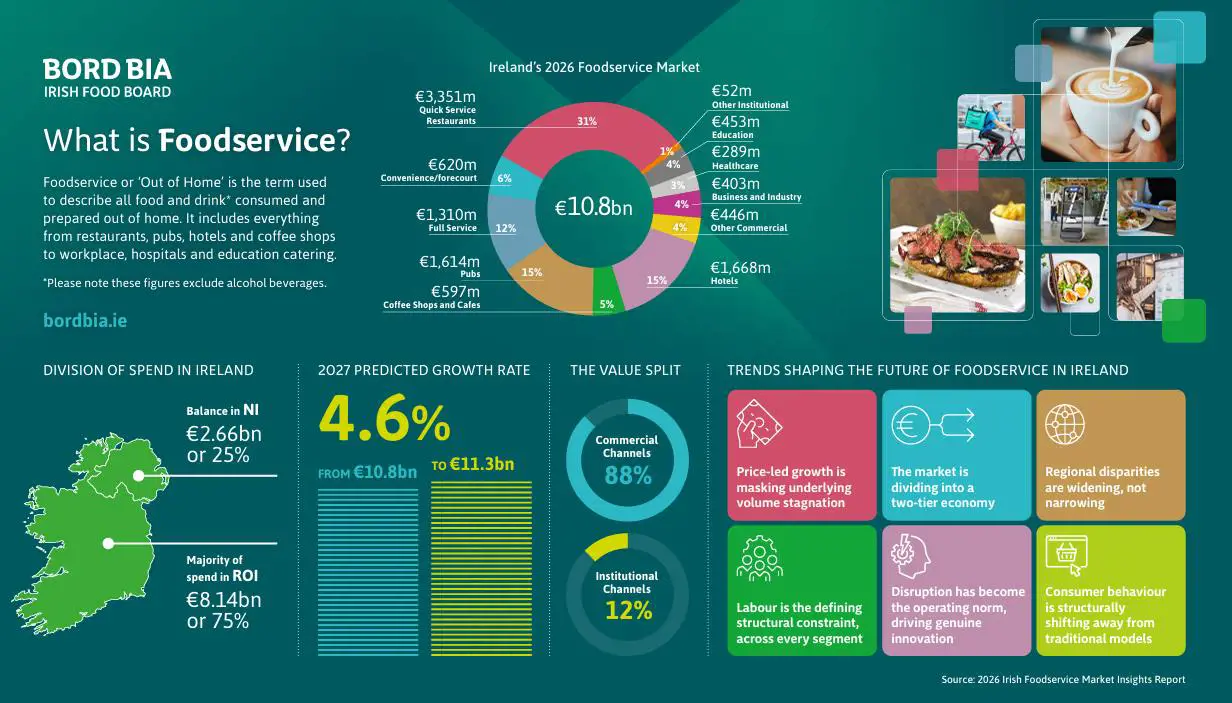
Image: Overview of Ireland's foodservice sector in 2026, highlighting market value, channel breakdowns, growth projections and the key trends expected to influence the industry in the years ahead.
According to Bord Bia, this trend presents opportunities for Irish food and drink producers that can provide value-added products and solutions to foodservice customers, as Maureen Gahan added:
"We are seeing operators place greater value on supplier partners that can help improve efficiency, consistency and productivity, while maintaining high standards of quality. For Irish food and drink businesses, there is a clear opportunity to support the sector with solutions that address the practical challenges facing foodservice operators today."
Separately, the report points to the emergence of an increasingly divided market. Value and convenience led operators, such as quick service restaurants and food-to-go outlets, continue to outperform the wider market, while premium experience-led venues have remained resilient. Many mid-market businesses, however, face growing pressure as consumers become more selective about spending, a trend Bord Bia expects to deepen over the next 12-24 months.
With the market projected to grow by a further 4.6% in 2027, Turning Disruption into Opportunity will be one of the key themes explored at Bord Bia's annual Foodservice Seminar today, where more than 300 industry professionals will gather to discuss how businesses can respond to labour pressures, changing consumer behaviour and emerging growth opportunities across the sector.
The full 2026 Irish Foodservice Markets Insight report is available on request; please email thethinkinghouse@bordbia.ie.
Notes
- Research Data source: Bord Bia Irish Foodservice Insights Report 2026 produced in partnership with industry researcher Technomic.
- Definition of 'foodservice market': The foodservice market includes all food and drink consumed and prepared out of home, incorporating restaurants, pubs, hotels, coffee shops, workplace catering, hospitals, education, and vending. Figures included in this report exclude alcohol sales.
- Bord Bia provides a range of ongoing supports to the Irish foodservice industry on our website (www.BordBia.ie), including market updates and insights, networking and collaboration opportunities, and an annual Foodservice Directory containing over 110 detailed profiles of foodservice operators and distributors.
- Industry speakers at Bord Bia’s Irish Foodservice Seminar in Johnstown House Hotel, Enfield today include: Tom Keogh, Managing Director, Keoghs Crisps; Dymphna O’Brien, Managing Director, Bretzel Bakery; Siobhan McDonagh, Strategic Marketing Manager, Supermacs; Andera Masiero, Head of New Product and Brand Partnership, Hello Fresh; Sophie Rooney, co-founder and CEO, Chimac; and Aoife Wycherely, Procurement Director, Sodexo UK and Ireland.