


About Spring Bulbs
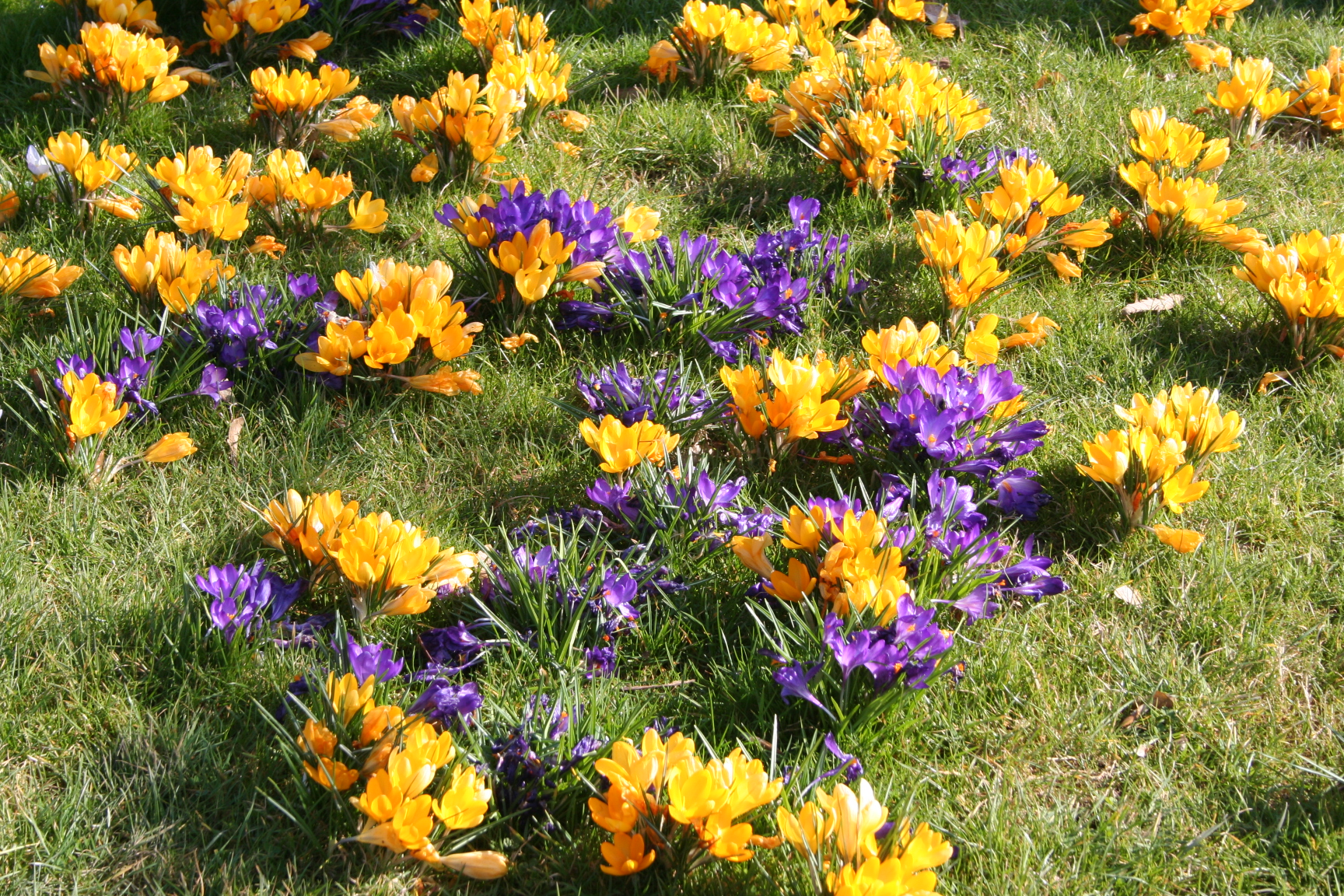
Spring bulbs can add a vibrant splash of colour in a lawn or grassy area and provide valuable nectar for bees early in the year. For the greatest impact, use a single variety or a limited palette of colours, planted informally in large drifts.
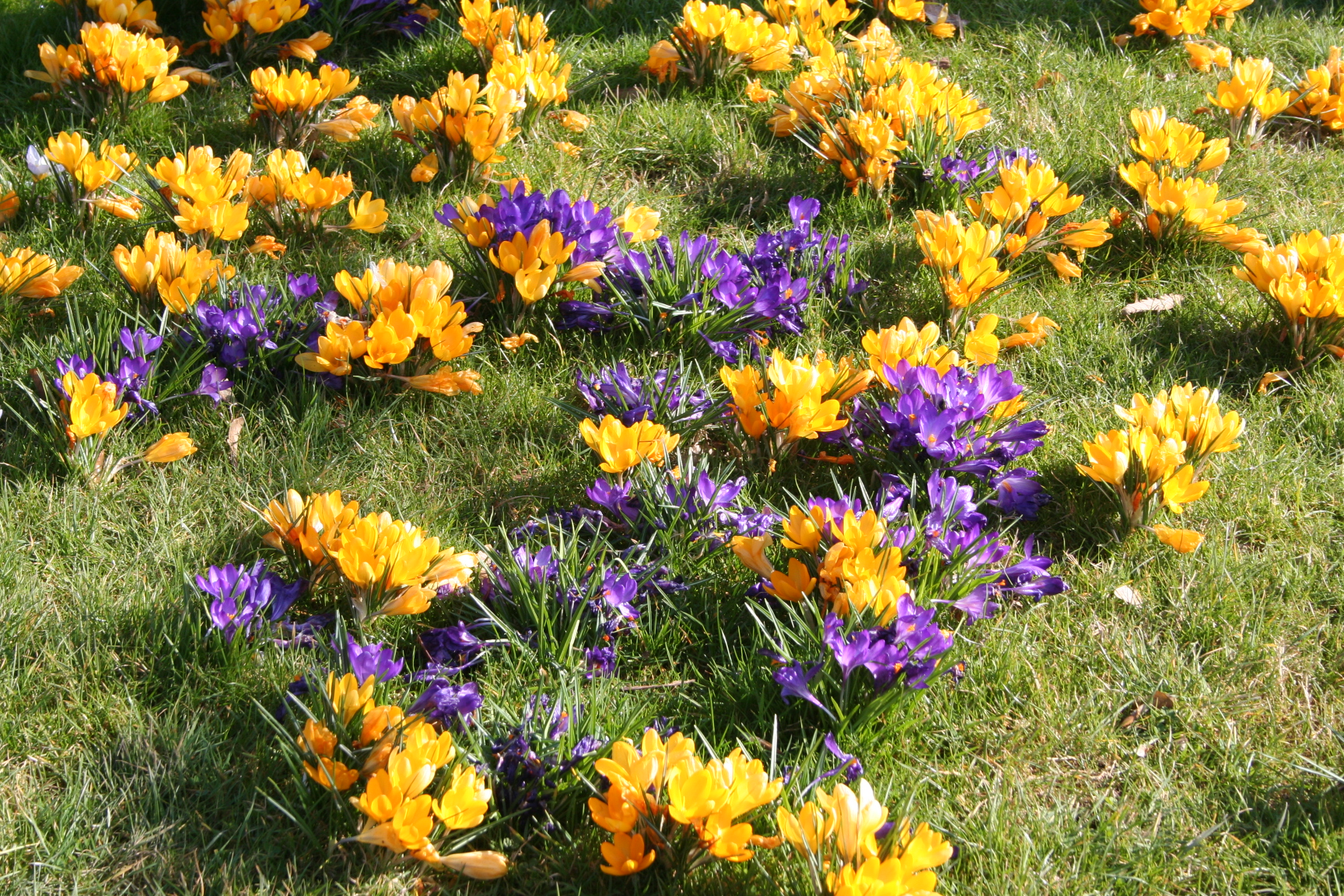
Crocuses, snowdrops, scillas, grape hyacinths, anemones, small tulips and daffodils are all good choices for naturalising. In damp areas, try planting snake’s head fritillary, fritillaria meleagris. Bulbs that flower later in spring and into early summer, such as camassias are useful for adding splashes of colour in long grass and meadows.
Just remember that you’ll have to leave the area unmown for several months in spring, from once the leaves start to appear until they die back. So, it’s usually best to plant in specific areas where the grass can be left unmown, rather than scattering them across the whole lawn.
Early-spring bulbs, like crocuses, are ideal for most lawns since they usually fade before the lawn needs to be mowed. Plant them in autumn, following these simple steps, and they’ll flower every spring for many years to come.
Courtesy of The Irish Garden magazine.
You will need:
- Spring bulbs
- Bulb planter or trowel
- Half-moon edging iron or spade
- Hand fork
- Grit or sand
- Garden rake
- Wire netting
- Watering can


Step 1
Choose an area of grass that can be left unmown throughout the early part of the year and that isn’t walked on regularly. Most bulbs like a sunny, well-drained spot in order to thrive.
Check that bulbs are firm and undamaged with no signs of mould. To make the bulb planting look natural, scatter the bulbs across the lawn and plant them where they land.

Step 2
Make a hole for each using a trowel or use a bulb planter to take out a core of soil to a depth of three times the bulbs height.
If the soil is poorly drained, grit or sand can be added to the bottom of the hole.

Step 3
Place the bulb in the hole with its pointed growing tip facing upwards. Then cover with soil and firm down.
If using a bulb planter, cut the next hole — this dislodges the first core of soil still sitting in the bulb planter which can then be placed over your first bulb.
Make sure it is flush — use your foot to firm it in place if necessary.

Step 4
If there are a lot of bulbs to be planted or if they are small and need to be planted closer together, an alternative method is to plant several bulbs into one large hole.
Use a half-moon edging iron or sharp spade to cut the letter H into the lawn, to a depth of about three times the height of the bulbs.
Then slice under the turf horizontally using the spade.

Step 5
Roll the two flaps of turf back carefully to avoid breaking them. Lightly fork the bare soil to loosen it and add grit or sand if the soil is poorly drained.
Scatter the bulbs on the soil ensuring that the placement looks natural. Plant them at the required depth with their pointed end facing upwards.

Step 6
If you want to deter ravenous squirrels or mice from digging the bulbs from the ground, cover the planting area with fine chicken wire or mesh with a small grid pattern before replacing the turf.
The bulbs will easily send their shoots up through the holes in the mesh.

Step 7
Roll the turf back into place and firm it down well with the back of a rake, checking that the area is level with the rest of the lawn.
Fill any gaps with soil or garden compost and water well so the grass keeps on growing.
Aftercare
Avoid mowing the planted area in the following spring, to allow the leaves to grow and the flowers to open, bringing cheery colour to your lawn. While the grass has to remain long, cut around it neatly so that it looks as if its presence is intended. Allow the bulb foliage to die back and turn yellow, which generally takes about six weeks after flowering. Then you can start regular mowing. 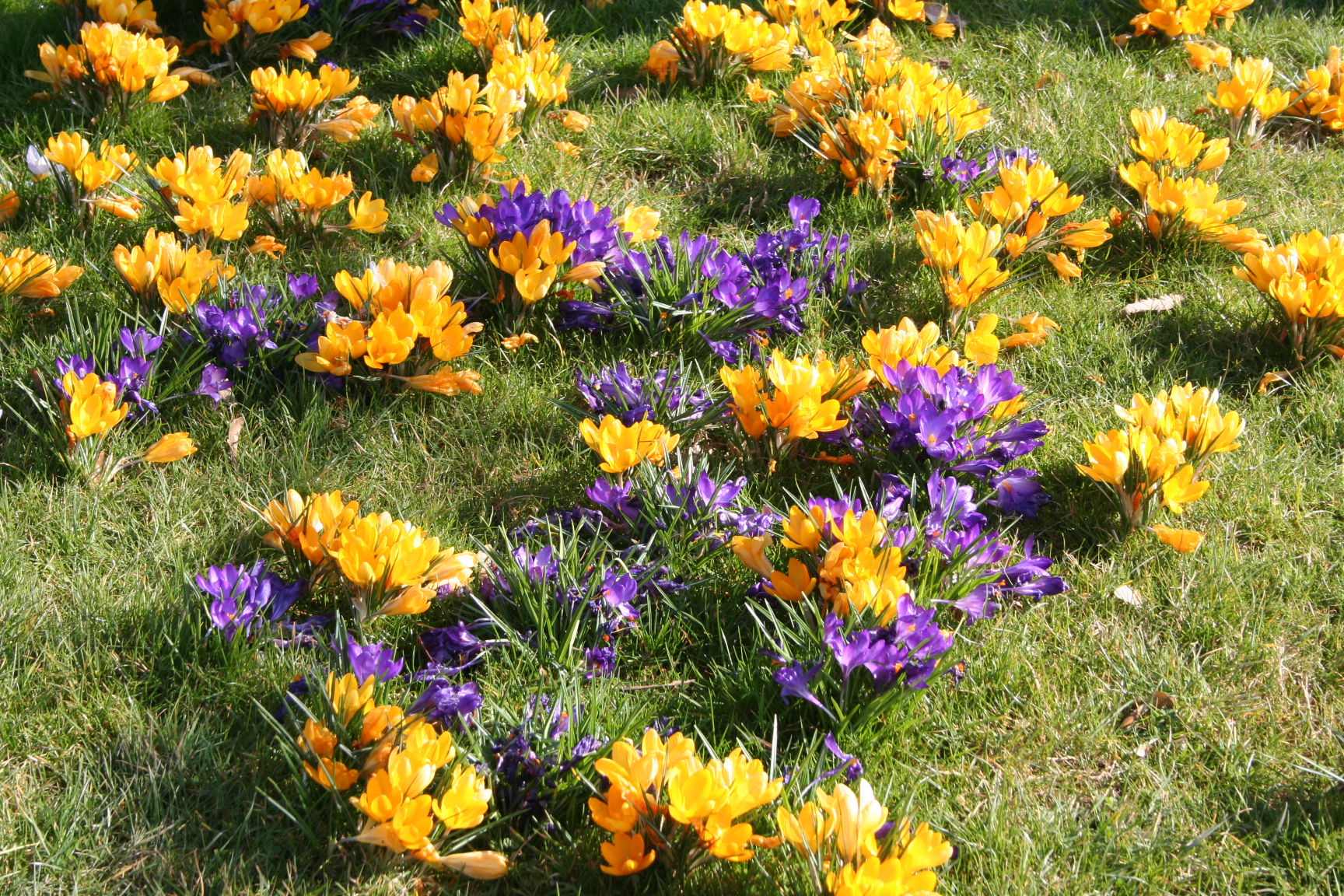
Cutting the bulbs early can weaken the bulb resulting in poor blooms during the next year or the bulbs may not reappear. If growing bulbs, such as crocus, to increase by self-seeding, do not mow the grass until the seed capsules have been able to shed all their seed, usually about three weeks after the leaves begin to die down.
Don’t be tempted to regularly feed bulbs growing in a lawn, especially with nitrogenous fertilisers. It only results in the competing grass growing too lush and strong at the bulbs expense. If the soil is very poor, you can use a sprinkling of potash to aid flower production.