

Jane Leydon, Global Graduate Strategic Insights & Planning, Bord Bia - The Irish Food Board

Image with thanks to Magic Spoon
Magic Spoon is a new cereal recently launched in the U.S. This cereal magically provides a similar taste to your traditional sweet cereal while also being high in protein, low in carbohydrate, made with natural flavours only and free from sugar, gluten and grain. This FoodAlert will examine how Magic Spoon appeals to consumers who enjoy eating cereal but are put off by the high sugar content, it will then conclude with implications for Irish suppliers.
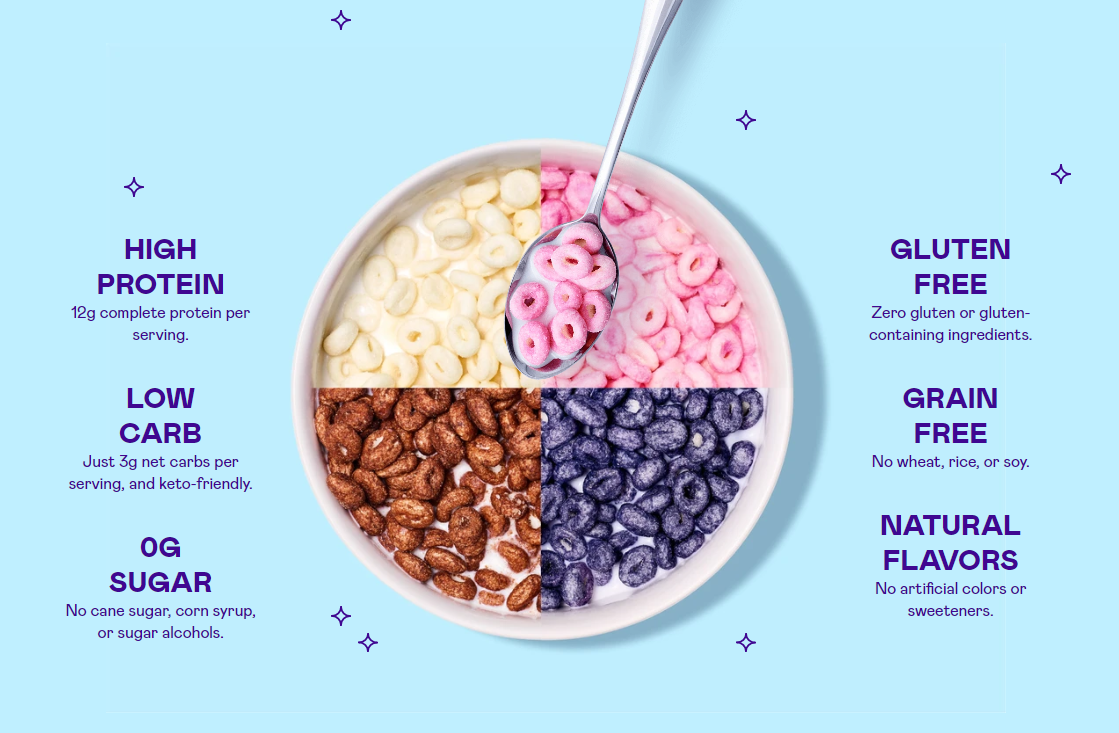
Image with thanks to Magic Spoon
“The category is in decline only because everything in it today is high sugar, high carb, and full of junk. But most people still love cereal, so we set out to fix the problems.” (Magic Spoon founders, Gabi Lewis and Greg Sewitz, discussing why they created Magic Spoon.) (DeFino, 2020)
Lewis and Sewitz grew up loving cereal but when they started to pay attention to their health they felt guilty eating it (Hoeffner, 2019). They couldn’t understand how nobody had found a way to make a healthy cereal that tastes and evokes the same joy of childhood classics. From their experience, the cereal aisle presents either one of two options; high sugar cereals or bland healthy cereals. Inspired by this, they set out experimenting for over a year to create a cereal that embodies the flavours and nostalgia of favourite childhood versions, while upgrading the ingredients for a 21st century consumer (Hoeffner, 2019).
While cereal would appear to be the ideal solution for busy lives today, research shows that consumers in the US are increasingly turning away from cereal for breakfast (Magic Spoon: Spoonfuls of Healthy Nostalgia, 2020). US shoppers are more likely to view cereals as the less healthy option being full of sugar and lacking in nutrients. This has resulted in US sales of cold cereal falling by 6% between 2012 and 2018 (Magic Spoon: Spoonfuls of Healthy Nostalgia, 2020).
With the prominence of the Health and Wellbeing trend, consumers have turned their attention to healthy and flavourful alternatives. In response to this, cereal brands have been scrambling to innovate to cater for consumers changing breakfast needs. Kelloggs have created separate nutritious and healthier breakfast options. However, Magic Spoon represents a more successful approach to the Health and Wellbeing trend by focusing on the traditional and well-loved cereals and making them healthy. Magic Spoon is innovatively healthy being made from a blend of monk fruit, stevia, and allulose - the cereal imparts low-calorie sweetness with a reduced glycemic impact.
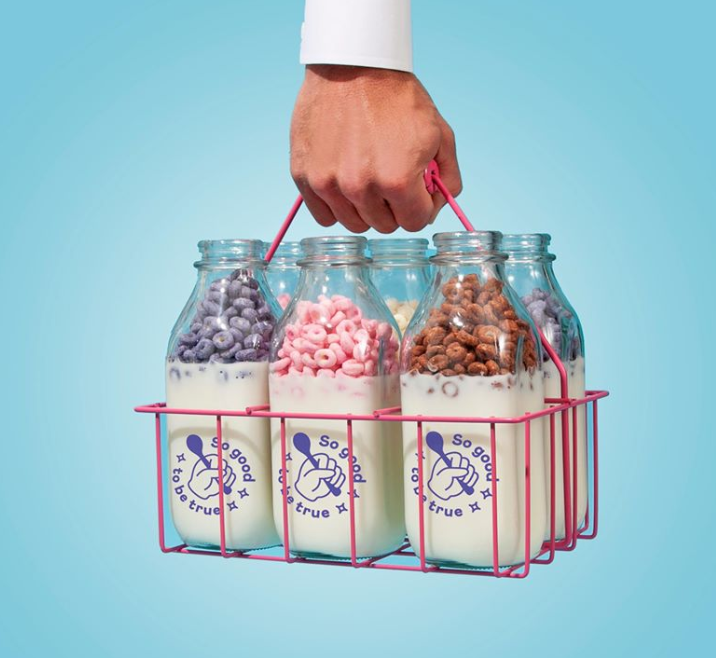
Image with thanks to Magic Spoon
Magic Spoon exemplifies the important role packaging plays in the introduction of a new product to the market. 66% of shoppers say that they have tried a new product simply because of the packaging (Magic Spoon: Spoonfuls of Healthy Nostalgia, 2020). Lewis and Sewitz, aware of this, decided to play to the consumer’s love of cereal and their emotional connection to it. Determined to find a way to speak to the consumer’s love of cereal, they designed packaging that is attractively whimsical with graphics that recall beloved childhood cereals. They also used design agency Gander to create vibrant box branding that is engineered to stand out on social media feeds (Magic Spoon: Spoonfuls of Healthy Nostalgia, 2020).
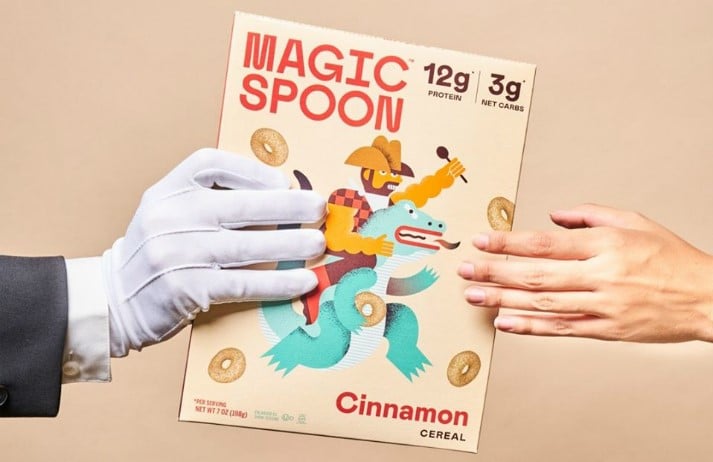
Image with thanks to Magic Spoon
“We wanted to transport people back to Saturday morning cartoons, so we created these really playful, colourful, character-based cereal boxes” (DeFino, 2020).
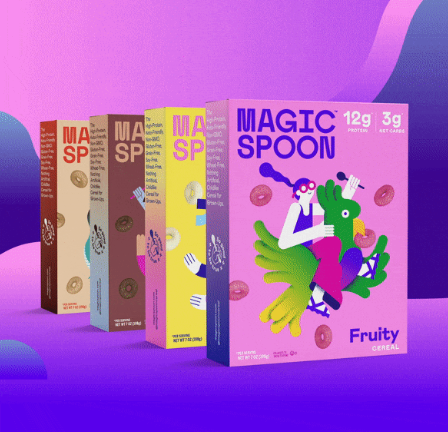
Image with thanks to Magic Spoon
Magic Spoon was launched in September 2019, exclusively through their website to order in bulks of four. As a direct to consumer brand (D2C), they are tapping into a market that wants access to eating well and developing their healthy eating habits to be as easy as clicking a button (Magic Spoon: Spoonfuls of Healthy Nostalgia, 2020). The founders were determined to speak to what modern consumers are looking for today and they know that convenience is key, and consumers, especially millennials, are buying more online than ever before (Hoeffner, 2019).
A happy coincidence of basing themselves online is that their feedback loop is much tighter, allowing them to get direct feedback from their consumers. This feedback has been extremely valuable insight for them going forward (Hoeffner, 2019). They believed it made the most sense for them to cater to people’s shopping trends by delivering directly to the door, and this model has proved very successful for them (Magic Spoon: Spoonfuls of Healthy Nostalgia, 2020).
With a comparably expensive subscription fee, which works out at approx. $10 per box, it is notable that this has not been a deterrent. Magic Spoon has achieved high reorder rates and it sold out its first month inventory in just one week (Magic Spoon: Spoonfuls of Healthy Nostalgia, 2020).
In November 2019, it won a spot on TIME’s Best Inventions of the Year. Despite their success with the D2C model they plan to pivot to grocery stores. They want to have maximum awareness and inspire more of a difference, and to do this they realise that they need to be everywhere (Magic Spoon: Spoonfuls of Healthy Nostalgia, 2020).
What can Irish suppliers learn from Magic Spoon?
The Breakfast cereals category is performing well in Ireland, and the demand for cereals continues to grow. However, it is largely shaped by the Health and Wellbeing trend with different groups of consumers seeking various nutritional benefits from breakfast cereals or looking for products that cater to their dietary requirements. “I want to eat, drink and live to optimise my body’s systems, to feel better than well today and tomorrow…” (Bord Bia, 2018) Overall, Health and Wellbeing, the aim to reduce sugar intake, and convenience played an important role in the demand for breakfast cereals in Ireland in 2019 (Euromonitor, 2019).
Breakfast cereals is expected to grow at a 3% current value CAGR (1% 2019 constant value CAGR) over the forecast period to reach sales of €263 million in 2024 (Euromonitor, 2019). With this in mind, Irish suppliers should take learnings from how Magic Spoon have embraced the Health and Wellbeing trend in order to play and win in this category. Magic Spoon is a source of inspiration for Irish suppliers in this category. They have created an eye catching ‘childlike cereal for grown ups’ which plays on nostalgia and wellbeing. “They’re trying to market a similar, but healthier, product to the demographic that would be nostalgic for it.” (Megan Poinski, Food Dive Senior Editor) (Magic Spoon: Spoonfuls of Healthy Nostalgia, 2020)
References
Euromonitor International. (2019). Breakfast Cereals in Ireland.
Canvas8. (2020). Magic Spoon: Spoonfuls of Healthy Nostalgia [pdf].
DeFino, J. (2020). Magic Spoon is a 'childlike cereal for adults' that's high in protein and low in sugar — I tried all 4 flavors and now I'm hooked. Retrieved 10 March 2020, from https://www.businessinsider.com/magic-spoon-healthy-cereal-review?r=US&IR=T
Hoeffner, M. (2019). Magic Spoon Is The Future Of Cereal. Retrieved 10 March 2020, from https://www.forbes.com/sites/melissakravitz/2019/10/25/magic-spoon-is-the-future-of-cereal/#68b986a77240