

Billel Haddad, Bord Bia Consultant – The Irish Food Board
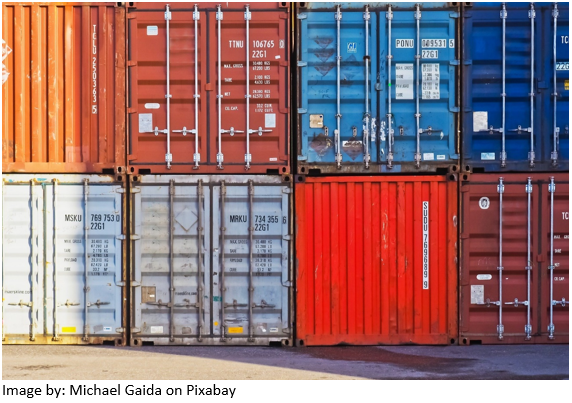
In a context of popular uprisings, the Algerian economy, like other sectors of the country is experiencing a significant slowdown. This trend is evident in the published figures for Algerian food imports. The contraction in these imports is not only the result of measures implemented by the government to reduce the country's dependence on imported products, it is also the consequence of an uncertain political and economic context that affects the morale of the Algerian investor as well as of the consumer. The cereals and dairy products that form the basis of the Algerian diet have experienced declines exceeding 10% as indicated below.
The food import bill in Algeria fell in the first half of 2019 compared to the same period last year. From 4.61 billion to 4.13 billion USD, a 10.52% decrease according to the figures of the Direction Générale des Douanes algériennes (DGD) and la Direction des études et de la prospective des Douanes (DEPD)
The details of the drops are as follows:
- Cereals, semolina and flour (representing 33% of food imports) decreased from US $ 1.672 billion to US $ 1.356 billion, or -18.89%.
- Dairy products decreased from $ 789.38 million to $ 690.37 million, or -12.54%.
- Sugar and sweets fell from USD 438.89 million to USD 348.81 million, or -20.53%.
- Residues and waste from the food industry (including crabs and other solid residues) saw the largest decline, down 34.47% from USD 440.83 million to USD 288.86 million.
- Other products experienced lower declines, such as coffee and tea (-0.21%) and vegetables (-1.32%).
Nevertheless, over the same period, live animals increased by 25.76%, from 114.19 million USD to 143.60 million USD. During last year, Algeria suspended live animals imports due to foot and mouth disease which explains the significant increase in 2019.
Ban on meat imports that was suspended only during Ramadan period supported this trend.
Irish food exports to Algeria are mainly dairy products and have followed the same tendency. From January to May 2019, Irish dairy exports dropped by 13.39% (Source Eurostat) comparing to the same period in 2018.
This period of political transition in Algeria wanted by the Algerian people engages the country in an unprecedented instability. Democratic elections supported by the population would probably be the fastest way to a return to normalcy that could eventually create the right conditions for economic development.