

Sheep milk: An opportunity to grow Irish production?
Seamus McMenamin - Sheep meat and livestock sector manager
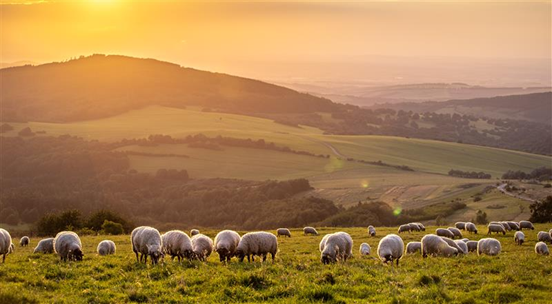 Sheep milk production is a very niche sector in Ireland; however, it is an area that has received increasing attention in recent times, with producers considering alternatives to dairy (cattle) production and the more traditional meat production from sheep. Over 95% of current sheep milk production in Ireland is consumed domestically, with small volumes exported to the UK and, to a lesser extent, Continental Europe. Production is dominated by cheese, with a range of soft, semi-hard, and hard cheeses available through supermarkets and specialty stores.
There are currently almost 260 million milking sheep globally producing almost 11 billion litres of milk annually. Much of this global production remains within the informal sector with formal sheep milk processing confined primarily to more developed regions of the world.
Europe accounts for 11% of the global milking sheep flock and dominates the processing of sheep milk. The region has been characterised by declining milking ewe numbers over the last decade, however greater intensification in production systems has meant there has been growth in the levels of sheep milk production over the same period. While there has been some level of investment to drive up production levels the declining sheep numbers in the EU are a symptom of wider issues in the sector including the age structure of farmers, climate challenges and profitability pressures.
Four countries, namely Greece, Spain, Italy and France account for 93% of the volume produced in the EU with over 90% of milk processed used in cheese production. This amounted to an estimated 390,000 tonnes in 2022 with Feta, Manchego, Pecorino and Roquefort being the dominant end products.
Sheep milk cheese attracts a significant marketplace premium, with retail prices for Protection Designation of Origin (PDO) products traditionally 20%–25% ahead of non-PDO cheese, with the differential increasing over the last year. While the majority of sheep milk production in the EU is consumed in the market where it is produced, recent years have seen a growing export demand for sheep milk and cheese.
At first glance, the premiums available for sheep milk products over conventional bovine dairy offerings are encouraging. This, coupled with the forecast decline in European sheep milk production, has contributed to the spike in interest in the sector from an Irish perspective, particularly given the potential of our grass-based production systems to significantly reduce input costs. Prospects for consumer demand remain positive in the short to medium term, with further growth in demand expected from international markets, albeit from a small base, with the key demand drivers for sheep milk products including digestibility, health, sustainability credentials, and taste and texture.
The climate challenges facing society and the corresponding focus on climate action are increasingly influencing purchasing decisions by trade buyers and consumers alike. Sustainability offers a potential opportunity for Irish sheep milk products, provided they can authentically demonstrate their credentials in this space.
However, there are also significant challenges in the sector that must be overcome to incentivise higher levels of production. Despite the positive market perception of sheep milk products, they remain niche in most markets, and as a result, it can be challenging for new suppliers to establish themselves in the retail channel given volume expectations and promotional requirements. Much of the premium status is driven by PDO status, and given Ireland’s lack of tradition and experience in this sector, it will be difficult to achieve such an accreditation in the short to medium term. This creates a significant challenge for new suppliers to secure premium positioning and returns.
The current scale of production relative to other sectors also brings further challenges. It is estimated that current milking sheep numbers in Ireland stand at around 1,000 breeding ewes, with annual output estimated at 285,000 litres. Even with significant increases in production, it will be challenging to gain traction within the Irish dairy industry.
While there may be some potential to expand sheep milk production in Ireland, any future growth in the sector will require several significant factors to be addressed. These include the lack of experience in sheep milk production in Ireland, an absence of formal investment in genetics and technical knowledge, an absence of a clear business case to encourage new entrants, and limited coordination of production and processing capacity.
References:
Bord Bia (2023). MARKET POTENTIAL FOR IRISH SHEEP MILK. Bord Bia.