

Mairead McKeown, Manager Knowledge & Critical Capability Development, Bord Bia - The Irish Food Board
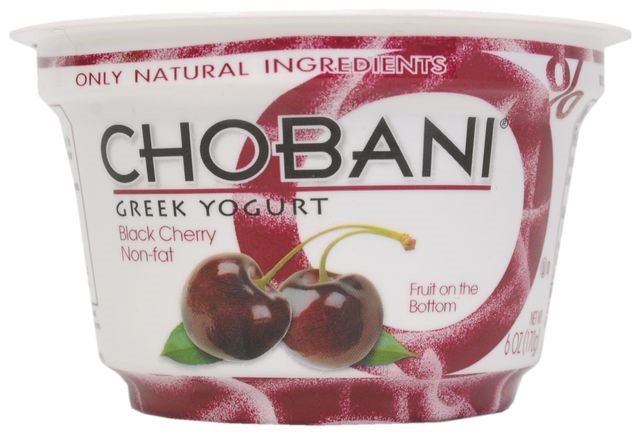
Image by: Mintel on GNPD
This FoodAlert article will tell the story of how a small yogurt company, Chobani, used secondary research to lay the foundation of a great campaign, which helped it overcome its greatest ever strategic challenge. The article will then conclude with the implications for Irish suppliers.
Context:
When Chobani was first established in the Northeast of the US, Greek yoghurt was tiny and pretty much unheard of in the market. Holding a 2% share of the yoghurt category for more than 10 years, this niche product was not on the radar of the ‘Category Captains’ Dannon (Now Danone North America) and Yoplait (Nielsen, UBS, March, 2011 - sourced in WARC, 2012)1. But by 2010, this was all changing. Increasing consumer interest in health enabled the Greek segment to reach close to a 12% share of the total yoghurt category (Mintel, Dec 2010)2. This once upon a time niche segment now offered Dannon and Yoplait an opportunity for growth. So, they set about bringing their own Greek brands to market, seeking to leave small players like Chobani out in the cold.
Chobani was now facing its greatest ever strategic challenge. Dannon and Yoplait collectively held over two-thirds of the market, had more than 100 years of experience and a marketing budget twenty times larger than that of Chonabi (WARC, 2012)3. The odds were stacked against Chobani and firmly riding on the backs of the two larger players. It was now crunch time, would Chobani sink or swim?

Campaign & Objectives:
In response to this challenge, 2010 saw Chobani set out to create its “first national campaign that would introduce the brand to America and give the country's 125 million yogurt eaters a compelling reason to put down their Dannon or Yoplait and try Chobani”. (WARC, 2012)4. The objectives of the campaign were ambitious, they needed to halt the rise of Dannon and Yoplait, maintain their leadership and increase segment share in the Greek category by 10%. Importantly they set out to increase their market share of the total yogurt category by 30%. Looking at the category with a fresh set of eyes, Chobani quickly saw that Danonn and Yoplait “had spent the past few decades positioning their yogurt more like a medicine than a food. Brands either talked about bowel movements, calcium, immunity, or weight loss. It was all extremely functional. And, extremely female-focused” (WARC, 2011)5.
It would have been really easy for Chobani to assume that these two ‘Category Captains’ knew what they were doing and simply follow their formula. But, here’s where the story gets really interesting. Rather than make assumptions, Chobani undertook some basic secondary research. It was this basic secondary research which revealed two critical flaws in how Dannon and Yoplait were approaching the category. Additionally, and more importantly, it enabled Chobani to spot the REAL opportunity upon which its campaign was built.
Two Golden Nuggets from the Secondary Research:
- Through consulting a Mintel Report on Yoghurt in the US, Chobani discovered that the number one reason people buy yoghurt is for taste and NOT for functional reasons (Mintel, 2009)6. So what? Dannon and Yoplait were positioning their yoghurt more like a food than a medicine. This approach was flawed.
- Simmons secondary research then revealed that more than 1 in 3 US men were eating yoghurt. So What? Dannon and Yoplait were ignoring nearly 5Omn yoghurt eaters. This approach was also flawed. (Simmons, 2010)7.
Safe in the knowledge that the Captains approach to the category was flawed, Chobani decided NOT to go down the same route. Instead they decided to adopt an inclusive approach to the category, leverage the great taste of Chobani and celebrate the first yogurt that people could be passionate about. They decided to shine a light on their early adopters and have them share their love for Chobani, in order to awaken the curiousity of consumers who had never tried it. The Big Idea was a national campaign that celebrated the first yoghurt people could love. You can watch one of the promotional videos from the campaign here (Chobani, 2011)8
Key decisions that guided the campaign:
- Keeping it real, Chobani searched social media to find the very best stories of passion posted by real Chobani consumers. After meeting and having conversations with these early adopters, they created their Real Love Stories campaign.
- In order to be inclusive, Chobani found real love stories from BOTH women and men. Not stopping there, they also included media and publications that were gender neutral or skewed more towards a male dominated readership, for example The Huffington post.
- Chobani used broad-reaching broadcast mediums to drive brand awareness. However, considering that their campaign was born out of social media and given the fact that Simmons secondary research provided proof that yoghurt eaters were active online, Chobani also used social media to further engage yoghurt eaters in a space where they were both comfortable and active.
Results & lessons learned:
The campaign successfully leveraged America’s love affair with Chobani. Achieving its objectives, Chobani increased sales by 34%, dominating the Greek segment with a 57% market share (IRI, 2011)9. Going even further, Chobani went on to become the Number 1 Greek yoghurt and the Number 1 yoghurt in the total US category.
So what’s the real lesson to be learned in this great story?
There is no doubt that there are many lessons to be learned from this story. The stand out lesson is the critical importance of secondary research. The importance of how it enabled Chobani to spot flaws in the category and the competitors’ approach, to identify the real opportunity and lay the foundation of a great campaign which against all odds, led to truly amazing results. That is a real love story about secondary research and is an idea worth sharing.
Implications for Irish Suppliers:
Are you an Irish supplier who’s ready to write your own love story about secondary research and lay the foundation for future success? Then contact The Knowledge and Market Intelligence Team to discover how we can help. We can give you access to our world-class collection of great secondary research sources, just like the ones Chobani used to go head to head with Dannon and Yoplait (we have lots of great primary sources too, just click here to learn more). Our Team will work with you to understand your information gaps/challenges and help you find the best possible search results for your needs. To learn more or request some market insight & intelligence, contact us at thethinkinghouse@bordbia.ie
“Testing assumptions allows you the power to create possibilities” Lisa. A Minnini.
References:
1, 3, 4 - WARC. (2012). A Love Story About Yoghurt. Retrieved from http://www.warc.com
2, 6 - Mintel. (2009). Yogurt - US - November 2009. Mintel. Retrieved from https://store.mintel.com/yogurt-us-november-2009
5 - WARC. (2011). Chobani: A love story about yoghurt. WARC. Retrieved from http://www.warc.com
8 - Our Real Love Story. (2011). Retrieved 11 March 2020, from https://www.youtube.com/watch?v=tx04yM3uXR8
7 - Consumer Attitudes, Behaviors, and Psychographics - MRI-Simmons. (2010). Retrieved 11 March 2020, from https://www.mrisimmons.com/
9 - IRI - Delivering Growth for CPG, Retail, and Healthcare. (2011). Retrieved 11 March 2020, from https://www.iriworldwide.com/en-US/