

Covid Gives Extra Boost to the Dairy Assortment in the Netherlands
7th December 2020
Lian Enters, Market Specialist Netherlands, Bord Bia – The Irish Food Board
Consumer demand has been on the rise for dairy during the Covid crisis in the Netherlands. The increase in some subcategories is expected to hold as foods that can protect our immune systems are likely to grow in popularity. In this article a closer look at the category and the opportunities it can bring.
Increased demand
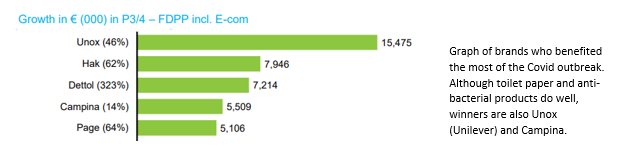
The Dutch dairy segment as a whole has shown growth over the past years and is expected to grow to €6.4 billion by 2023, at a CAGR of 3.9%. In volume terms, the CAGR is smaller with 1%. The per capita consumption of dairy & soy food in the Netherlands is expected to reach 109.6 kg by 2023. It is a lot higher than global levels, but also higher even than European levels. (Global data). During the Covid outbreak the category grew as well. As result of this category growth, dairy brand Campina registered the fourth greatest growth amongst food and drink brands during the Covid period (Nielsen).
Shielding
Bord Bia’s Thinking House have been tracking changes in consumer behaviour and came with a toolkit of insights that can help your business. In the toolkit Shielding is described as one of the major trends arising from pandemic. There is a greater focus on food functionality, greater focus on the science of food function and a greater scrutiny on immunity claims. This trend was already present in the plain yoghurt category and will most likely increase in importance in the total dairy category. (Bord Bia Future proofing toolkit)
Healthy yoghurts
Plain yoghurts and quarks have been in the rise, even before Covid. They are increasingly consumed for breakfast, and consumers want to pay attention to health and naturalness in their breakfast choices. A variety of plain yoghurts and quarks are on offer, and about 10 percent of this category is filled by the relatively new Kefir, which showed volume growth of over 39 percent over the past year.
While a breakfast may need to be healthy, consumers also consume more indulgent products (at different occasions), such as Danio flavoured yoghurts or ice coffee.
Less cheese on bread, more used in cooking
The Dutch have been slowly moving away from eating bread for breakfast and for lunch. As mentioned, consumers have moved towards yoghurt and fruits as breakfast alternatives and they seek alternatives in soups or salads at lunchtime. The sliced/whole cheeses category (cheese for sandwiches) has been affected by this and has been declining in volume for some time. However the culinary use of cheese is gaining popularity year after year. Last year, another € 43 million was added in the segment "Cooking with cheese". This is a growth of 16 percent in value and 8 percent in volume out of a total of € 319 million. (IRI)

Comfort cooking
Another trend arising from Covid is comfort cooking. This can be seen in the cheese category as cheese for oven dishes is thriving. Grated cheese is by far the largest segment in this sub-category, at € 189 million, which is completely dominated by private label. Fondue cheese also continues to grow with an increase of 15%.
Cheese for salads forms a good second in the ‘cooking with cheese’ category, with 8 percent growth in value and 5 percent in volume. The growth mainly comes from the cheaper variant of white cheese (+ 21 %) which is growing at the expense of more expensive variants like feta, but even here there is growth of 9%.
With people staying more indoors, the interest in baking has increased significantly. This increased the sales of cream cheeses for baking, probably higher than the 6% increase reported currently in the yearly IRI figures. ( Bord Bia furture proofing toolkit, IRI)
What does this mean for Irish companies?
The rise of healthy yogurts and the importance to the immune system of certain yoghurt and quark can bring opportunities for Irish companies that raise these claims on pack.
As home cooking has increased in importance, retailers could be looking to bring more variety to the consumer in the ‘cooking with cheese’ category.
With Origin Green and the grass fed standard as robust quality schemes Irish dairy companies are also well placed to have conversations with retailers who set high targets to make their dairy ranges better for the environment, or even climate-neutral, as Albert Heijn aims to achieve for its private label dairy range.
Sources:
Distrifood – Corona geeft boost aan zuivel en kaas
Bord Bia – Future proofing toolkit
Nielsen - What’s next after Covid-19 – Impact on retail and consumer landscape.
Global data Country Profile Dairy & Soy Food in the Netherlands, August 2019,
Passport, Euromonitor, YOGHURT AND SOUR MILK PRODUCTS IN THE NETHERLANDS August 2019
Top Growth Opportunities - Dairy & Soy Food in the Netherlands, September 2018