

Demand for Carbon Footprint Labelling is Heating Up in Germany
30th November 2020
Anne-Marie Kelly, German Market, Bord Bia - The Irish Food Board
What’s happening?
The CO2 (Carbon) footprint is increasingly becoming an important criterion for consumer decisions in Germany. What’s exciting about is that insurgent food brands are paving the way for climate positivity and using it to their advantage.

In November 2019, a number of well-known food companies in Germany initiated a petition managing 57,067 signatures. This was championed by Swedish oat milk company, Oatly and supported by mymuesli, Veganz, Freche Freunde and Fritz-Kola. Oat milk in general grew in popularity by 80% in 2019 – and within the plant-based milk category, oat milk is the leader.
Multinationals such as Nestle and Danone have also come out in support of the moves toward CO2 accountability with Nestle launching their first “climate-neutral products” and setting itself the target to come climate neutral by 2050.
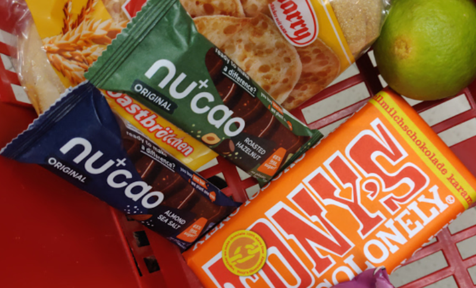
As recently as November 2020, snacking company The Nu Company (nu+cao) launched their #foodforanuworld campaign in which they wrote an open letter to the Minister of Food and Agriculture on the grievances in the food industry. The company also achieved 3,7 Million Euro in funding from food and beverage Investor Square One Foods.
Eaternity
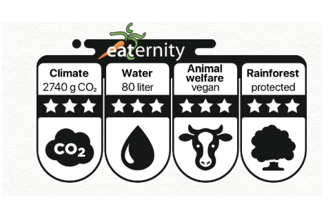
To help producers identify their climate impact, Swiss organisation Eaternity offers a possible standard for climate labelling. It shows four sustainability criteria; Climate, Water, Animal Welfare and Rainforest. One to three stars are awarded depending on whether a value is below or above average. Eaternity has a huge database base don over 3,000 studies that can calculate a carbon footprint with 90% certainty for any food. As of September, the Eaternity Score for all foods will be available on the Codecheck app and on all Veganz products in Germany.
What does this mean for Irish Producers?
These insurgent brands are pointing the spotlight on the German Bundestag, however there has been criticism from Berlin. The government is doubtful whether accurate climate labelling is possible for every product and they are shifting their focus to the EU Commissions “Farm-to-Fork” strategy. The main focus of the strategy to include key policy developments for sustainable agriculture and move towards food systems that stimulate dietary changes which are both healthier for us and decreasing the impact on the environment and climate.
The most relevant measures will be expected as of 2021 and Bord Bia is already well equipped as a result of the Origin Green Programme – particularly through the Quality Assurance schemes SBLAS and SDAS. Origin Green enables Bord Bia to seek commitments for sustainable food processing and retail practices and can help leverage Irish brands in the German retail industry. Germany could in fact become a pioneer and set an example for sustainable change worldwide by showing that people can make everyday decisions to help protect the climate.
Sources
https://gruender.wiwo.de/the-nu-company-gruender-sagen-lebensmittelindustrie-den-kampf-an/
https://www.oatly.com/de/hey-bundestag
https://eaternity.org/assets/product-info/2020-02-25-Eaternity-Score-ProductSpecs_DE.pdf