

Eating Pretty – How Functional Dairy Can Tap in to Skin Health
5th October 2020
Christina Howlett, Dairy Sector, Bord Bia - The Irish Food Board
The global market is observing a number of launches that border on cosmeceutical - that is, cosmetics that claim to have medicinal properties – with consumers also expressing an interest in food and beverages that promote physical appearance. Food for beauty is currently popular in Asia, but is rapidly moving to Western countries. To manage their skin, proactive consumers are turning to supplements for skin improvement, with a third of Chinese skincare product users having taken skin health supplements (Innova Market Insights, 2020).
Dairy products can be extremely beneficial for skin health and are well positioned to replace supplements, tapping into consumer demands for functional food and drinks that provide beauty benefits. Dairy brands can highlight the desirable benefits of using skin-enhancing ingredients. 31% of UK consumers believe it’s worth paying more for milk with specific health benefits than those without (Mintel, 2020). Hero ingredients for self-care include proteins like collagen and calcium, hyaluronic acid (HA) and probiotics, herbal ingredients and vitamins (Mintel, 2020).
Interest in dairy products with skin, nail and hair claims has increased, yet very few global milk and yogurt launches over the past five years have featured this claim, presenting an opportunity for Irish dairy companies. 12% of global dairy launches are already boasting functional claims. 26% of French consumers and 45% of Chinese consumers would be interested in yogurts with beauty-enhancing ingredients, whereas 15% of Canadian consumers would drink more milk if it had beauty benefits. These figures rise when focusing solely on female consumers. (Mintel, 2020)
Examples of hero ingredients that brands are utilizing to give their dairy products a skincare health halo:
Collagen
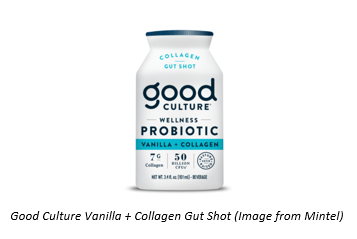
Collagen is a popular ingredient among skincare advocates and Good Culture’s Vanilla and Collagen Gut Shot (US) contains ‘7g of beauty boosting collagen’. Nutri Boost’s Flavoured Milk (Vietnam) is said to be ‘fortified with collagen for healthy skin’. 93% of Thai consumers have heard of collagen and around 45% consider it to be natural and effective.
Hyaluronic acid (HA) and probiotics
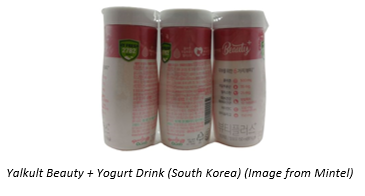
Half of Chinese adults have heard of or bought skincare products containing HA or probiotics and dairy brands are following suit. Nestle Brite Milk (Japan) includes HA and is said to be for ‘everyday beauty’, whereas Yalkult Beauty + Yogurt Drink (South Korea), containing lactobacillus is said to help skin beauty due to its probiotic properties.
Herbal ingredients
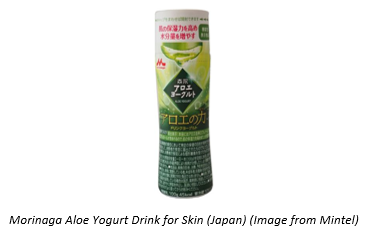
Over half of UK consumers who use products on their hands or body are interested in products containing the ingredient Aloe vera. Morinaga Aloe Yogurt Drink for Skin (Japan) is formulated with ingredients derived from Aloe vera and is said to retain moisture and boost skin hydration. Similarly, Pasteur Bareunmokjang Aloe Vera Yogurt (South Korea) contains 12% Aloe vera for ‘skin health’.
Vitamin E
Vitamin E is included in Ukrainian dairy product Voloshkove Pole Vitaminised Classic Bifido Yogurt, which is promoted as an antioxidant and aimsto prevent premature ageing. Ageing is a common concern, and products that can appear to help slow the process will appeal to 35% of Thai consumers who use their diet to assist with anti-ageing. Sun protection is also a common worry, but Meiji Suhada No Mikata Yogurt Drink for Skin Care (Japan) is described as helping to protect against UV rays, prevent dry skin and retain moisture.
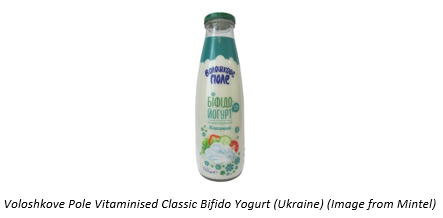
Voloshkove Pole Vitaminised Classic Bifido Yogurt (Ukraine) (Image from Mintel)
In conclusion, Irish dairy companies can easily offer a suitable platform within the functional food and drink space to provide beauty benefits, and also highlight desirable benefits such as prevention of premature ageing or increasing skin hydration.
References:
- Vlietstra K (2020) Functional dairy is poised to enhance skin health. Mintel.
- Innova Market Insights (2020) Top Ten Trends 2020: Opportunities for Dairy. Food Ingredients First.