

James O'Donnell, Manager Italy, Bord Bia - The Irish Food Board
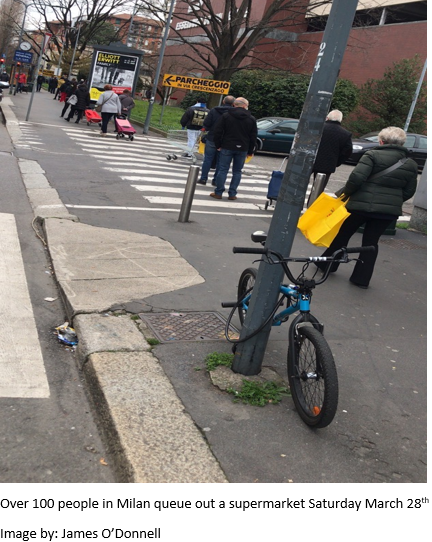
Italy is now into the third week of lockdown with at least two more weeks to go. April 12th is the new date for the lifting of lockdown but few expect business, particularly the severely hit foodservice sector to resume normal business before May at the earliest.
The impact of the present situation puts major strains on the economy, services and consumers. A report this week from National Federation of Industries puts the weekly cost of lockdown at 0.75% points of GDP. Estimating a drop in GDP for 2020 of 7%.
Consumers needs have changed in the present environment focusing on cooking healthy and staying at home. An initial focus in the early days of the crisis was on stocking up on frozen and canned products however this has changed as supermarkets shelves remain well stocked. Sales of protein, including beef value cuts have been very buoyant and indeed there has been some increase at wholesale level on prices being paid. This week as consumer’s attention focus more on the aftermath of the health crisis we are seeing concerns around the economic future directing customers more to cheaper protein sources such as pork and chicken. Today “going shopping” is the big challenge. Queues of three hours to entry the stores are normal at the weekend. For retailers the challenge is getting customers in and out as fast as possible. Retailers are no longer doing promotions, limiting the line of items offered to “essential items” and encouraging card transactions. Fresh seafood & meat counters are closed.
The old supply chain models are failing to connect consumers with products and pose the single biggest problem for the food industry. The models have been based on getting food to restaurants or retail outlets leaving the consumer to take it the “final mile”. Today what is required to connect is the ability to go the final mile. At retail level home delivery requests have surged over 100% while delivery times are now over two weeks out. The traditional butcher which still remains an important segment of meat sales in Italy have seen sharp increases in retail business as smaller queues and a limited home delivery offer attracts consumers.