

The Impact of Coronavirus on UK Shopper and Consumer Behaviour – Part 1
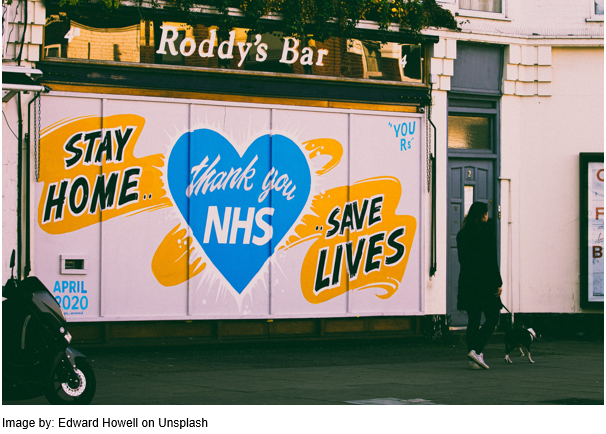
Bord Bia GB and Him MCA hosted a webinar on the impact of the Coronavirus crisis on UK shopper and consumer behaviour. This FoodAlert, the first in a three-part series, is built on insight from MCA’s UK Recovery Report and the webinar.
The Him MCA UK recovery report examines the state of play for the UK food industry and looks at the business implications of the coronavirus pandemic, as well as the key learnings to help food and drinks businesses navigate this new landscape and the new consumer attitudes that come with it.
PEST Analysis of the Impact
Political
Government imposed lockdowns, in the interest of public safety, forced the closure of the UK’s hospitality industry virtually overnight. The easing of lockdown restrictions began on Saturday 4th July and foodservice outlets were allowed to reopen their doors. However, the impact on businesses so far has been stark, with figures from UKHospitality Tracker showing turnover for April was down 90% on April 2019. The UK political landscape remains in uncertain territory, with the ongoing trade discussions in advance of the Brexit transition deadline of 31st December and added uncertainty around the value of government supports in place for hospitality businesses regarding staff and rents.
Economical
Forecasts say that the UK is set to go into a recession, with the knock on effect of this being a potential shift in consumer attitudes and spending behaviour.
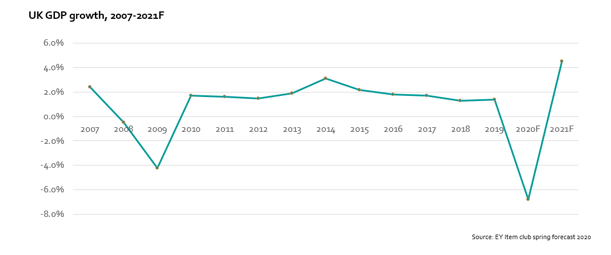
The UK is facing a political and economic balancing act, as GDP forecasts predicts a -8% decline in the year. Recessions and tighter consumer spending come hand in hand. With consumer confidence sitting at -34 points in April, similar to levels seen in 2008, we are likely to see consumers display recessionary spending behaviours.
It is also likely that we will see discretionary spending down across the board, a trend which in the past has always impacted the eating out market. However, foodservice’s loss is grocery retail’s gain, as consumers who once ate out for dinner multiple times a week and purchased lunch from food-to-go outlets are now cooking and consuming meals at home.
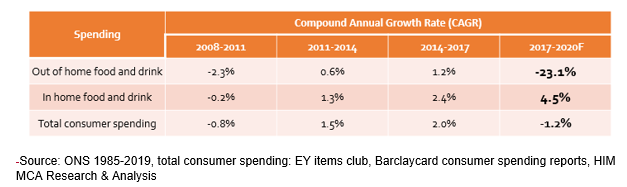
For suppliers, this means renewed focus on grocery business and a reassessment of foodservice operations. With social distancing measures in place, for many in the sector trading at lower levels will not be viable, which will likely lead to a number of casualties in the market and potentially mergers and acquisitions as chains work to stay afloat.
Continued working from home numbers in the short to medium term will likely lead to a sustained decline in food-to-go sales. Additionally, the prospects of recession may influence consumers to cut lunch-time out of home missions in a bid to manage spending.
Social
The fortune of foodservice outlets will likely be impacted by location, as busier city-centre sites lose visits due to reduced work-force visits and these busy spots being viewed as risky and in turn avoided.
There has been what is defined as a ‘local community hero’ mind-set in some more rural areas. as consumer attention turns to outlets closer to home. A heightened sense of community spirit and local shopping is expected to continue in at least the short-term recovery, with consumers set to continue buying from smaller and more local stores and eat in local foodservice outlets, avoiding busy city centre areas.
Coronavirus has shone a renewed light on consumer trends, such as health and wellness and sustainability concerns. Health and cleanliness concerns, especially in older and more vulnerable consumers, will lead to higher levels of risk aversion in the population as consumers opt for more home-based activities. Seen as more hygienic, the outbreak of coronavirus caused a lot of plastic packaging reduction initiatives to be put on hold. However another fraction of sustainability has seen growth over the lockdown period, in provenance. Consumers are becoming more interested in where food is coming from, and are more interested in eating and shopping locally and seasonally. This is likely to lead to a rise in local shopping behaviour, both in local stores and seeking local and British produce. Our Bord Bia’s Brexit Consumer Pulse research indicates that suppliers from Ireland are still well placed to serve the market, with 82% of UK shoppers open to choosing food and drink from Ireland, and with UK shoppers considering food and drink from the Republic of Ireland to be more local versus other EU countries, or the EU itself.
Aside from the immediate health concerns posed by the virus, there is an expectation that the increased time at home preparing and cooking meals will be a lasting legacy of lockdown.
Technological
Delivery, enabled by technology, in both foodservice and grocery retail is set to be a lasting legacy of the period, with grocery delivery rocketing and foodservice delivery a crucial part of trade for operators. As foodservice reopens, contactless is king. With lots of innovation and investment in this space already it is expected that a shift to contactless payments and service will be a legacy, limiting consumer and server contact.
Implications for Irish suppliers:
- Recessionary times ahead will result in a rebalancing of the premiumisation trend, with opportunities in value increasing and opportunities to trade up becoming slightly more niche, however not disappearing completely.
- Delivery continues to win, consider how well products travel for foodservice delivery and digital strategies to support sales in online grocery retail.
- Home working is set to continue, which is likely to cause a move away from food-to-go, heightened by recessionary spending behaviours.
- Importance of local outlets means regional footprint will become increasingly valuable and seeking local products will grow in importance to consumers. However, Irish suppliers are well placed ahead of other EU exporters to serve the market with British consumers being open to food and drink from Ireland and seeing Ireland as more local than other EU countries
- Technology is set to benefit with working from home a lasting legacy that we predict. There has also been a shift to contactless service and delivery, which looks set to continue and a trend to watch out for as it will be increasingly important to customers that suppliers are tech enabled and products are fit for foodservice and grocery delivery.
To find out more on this topic, look out for Part 2 in this series, which will be in next week’s Food Alert newsletter. In the meantime, if you would like more information on Bord Bia’s Covid-19 Response, visit the Bord Bia Covid-19 Hub by clicking here.
Source: MCA Recovery Report, 2020