

Veganism in Japan
August 10th 2020
Emmett Duffy, Market Advisor Japan, Bord Bia - The Irish Food Board
Markus Winkler (2020)
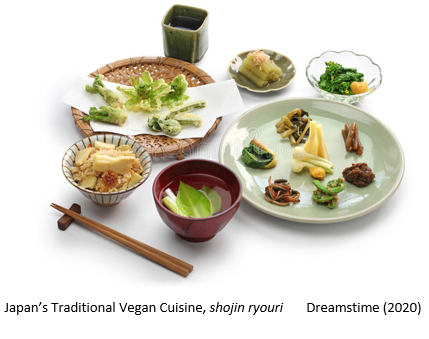
Traditionally, Japan has been known as one of the most precarious countries to navigate for vegetarians and vegans, as even the most seemingly plant-based dishes often contain some form of fish, whether as a seasoning or as a component of dashi (the ubiquitous light stock used in innumerable dishes). This has persisted throughout history despite Japan having its own ancient version of vegan cuisine originating from Buddhism, shojin ryouri.
However, this is no longer the case as the number and variety of vegan and vegetarian friendly venues and options continues to increase. Though the exact number of vegans in the country isn’t clear, a study by Vegewel suggests that as many as 2.1% of the population were vegan at the end of 2019, more than doubling in number from 2017 (2019). That’s roughly 2.5 million vegans in the country who need to be catered too. Many companies are taking note and launching their own vegan friendly initiatives.
Ito-Yokado, 7-Eleven’s supermarket, have trailed soybean meat alternatives adjacent to their meats, Japan’s second sake rice wine maker has been certified vegan and we’re seeing an increase of imported and domestic vegan snacks available in the convenience sector (Francis, 2020).
In foodservice, we’ve seen curry giant Coco Ichibanya add a permanent vegan dish to their menu, Mos Burger released Japan’s first plant-based burger, a number of ramen chains introducing veggie version of the popular noodle soup and even vegan bakery cafes (Terzuolo, 2020).
For most people in the world, the decision for people to adopt a vegan diet is driven by environmental issues (Strang, 2020). However, for Japan, a country known for balance when it comes to nutrition and calories, with long life expectancies and low obesity rates, health concerns are the main reason for trying plant-based diets (Francis, 2020).
Throughout the COVID-19 crisis we’ve seen people around the world changing their eating habits and attempting to be healthier, particularly by trying more plant-based products (Smitty, 2020). Uniquely, even amongst other asian countries, Japan’s grocery purchasing has barely changed during the crisis with few shoppers buying new brands or drastically changing their habits (Kujipers et al., 2020).
From this we can see that there is a growing opportunity for plant-based products in Japan. In terms of Bord Bia’s Consumer Lifestyle Trends, it is being driven by Health & Wellbeing rather than Responsible Living, or a combination of both, as is the case in most other countries (Bord Bia, 2019).
What this means for Irish producers, apart from making sure the health benefits of their products are well communicated whether vegan or not, is that Japan is a unique and slow-to-change market, with not even a global pandemic changing how the Japanese eat.
References
- Bord Bia. (2019). Trends Archive - Bordbia. Bordbia. Retrieved 5 August 2020, from https://www.bordbiaconsumerlifestyletrends.ie/trends/.
- Dreamstime. (2019). Sansai Ryori, Japanese Edible Wild Plants Vegetables Cuisine Stock Image - Image of mustard, collecting: 69219125. Dreamstime. Retrieved 5 August 2020, from https://www.dreamstime.com/stock-photo-sansai-ryori-japanese-edible-wild-plants-vegetables-cuisine-often-used-as-ingredients-shojin-buddist-vegetarian-image69219125.
- Francis, M. (2020). The Unique Japan Vegan Food Sector: Trends In Veganism In Japan - Tokyoesque. Tokyoesque - Globally Aware & Curious. Retrieved 5 August 2020, from https://tokyoesque.com/japan-vegan-food-sector/.
- Kujipers, D., Wintels, S., & Yamakawa, N. (2020). Reimagining food retail in Asia after COVID-19. mckinsey.com. Retrieved 5 August 2020, from https://www.mckinsey.com/industries/retail/our-insights/reimagining-food-retail-in-asia-after-covid-19#.
- Smitty. (2020). Healthy plant-based foods hook virus-conscious diners. Canvas8.com. Retrieved 5 August 2020, from https://www.canvas8.com/signals/2020/07/07/health-food-boost.html.
- Strang, A. (2020). Planty of Meat: vegan ‘meat’ for the eco-aware. Canvas8.com. Retrieved 5 August 2020, from https://www.canvas8.com/content/2020/06/02/planty-of-meat.html.
- Terzuolo, C. (2020). Vegan bakeries are on the rise in Tokyo | The Japan Times. The Japan Times. Retrieved 5 August 2020, from https://www.japantimes.co.jp/life/2020/07/25/food/vegan-bakeries-tokyo/#.XyKR2PhKgUQ.
- Winkler, M. (2020). Japan's vegan growth could be stalled by COVID-19. Canvas8.com. Retrieved 5 August 2020, from https://www.canvas8.com/signals/2020/08/03/japan-vegan-bakeries.html.
- Vegewel, (2019). 第2回日本のベジタリアン・ヴィーガン・フレキシタリアン人口調査. Vegewel. Retrieved 5 August 2020, from https://vegewel.com/ja/style/vegetarianstatistics2#:~:text=Vegewel%E3%81%A7%E3%81%AF%E3%80%81%E6%9C%AC%E8%AA%BF%E6%9F%BB%E3%81%A7,5.7%EF%BC%85%E3%81%A8%E3%81%AA%E3%82%8A%E3%81%BE%E3%81%97%E3%81%9F%E3%80%82.