

Linda Madigan, Manager Scandinavia, Bord Bia - The Irish Food Board
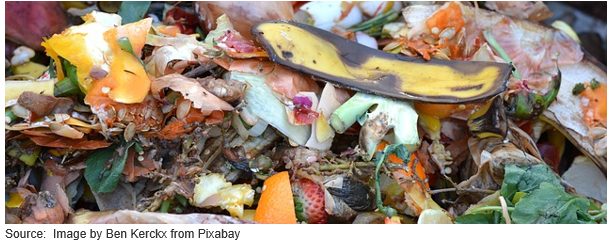
In Denmark, like the rest of the world food waste is an ongoing issue. It is estimated that over 700,000 tonnes of food are wasted or lost each year, equating to more than DKK11 bn (€1.4 bn) annually. The food industry is responsible for 133,000 tonnes of this and it is estimated that Danish households are wasting more than 260,000 tonnes per year. In April 2019 the Danish Ministry of Environment and food established a ‘think tank’ to address food waste and loss across the value chain. Some initiatives to combat this problem have had promising results.
A recent report in Danish trade magazine, Dansk Handelsblad reported that Denmark is the country in EU with the most initiatives against food waste, it is even on the political agenda of Denmark’s Prime minister. They are aligned with the UN SDG’s and have an ambition to make Denmark a pilot country for food waste and loss. The target for UNSDG 12.3 aims to halve per capita global food waste at retail and consumer levels and reduce food losses along the production and supply chains – including post-harvest losses by 2030. One initiative is that all Danish supermarket chains have a food waste reduction strategy, hospitals and food service and festivals are reducing food waste. Over 300 restaurants in Denmark offer ‘doggy-bags’ and are members of REFOOD label against food waste.
A number of Danish producers such as Arla, Carlsberg, Løgismose Meyers, Thise and Toms realised that there was much confusion around best before labels on food and drink and this was leading to food being discarded unnecessarily. They decided to try adding the words ‘often still good after’ (ofte god efter) to products with the words ‘keeps until’.
A food app ‘Too Good To Go’ is an initiative designed to make it clear to people that just because a food product is past the printed date, it can still be consumed. Another initiative only this week on Monday Sept 2nd, Denmark became the first country to ban toxic lining PFAS common in food containers and packaging.
New labelling on food packaging has been introduced by dairy company Arla, which enables consumers to see the effect of their shopping on the environment. From last week their cut cheese are wrapped in a more climate-friendly packaging, which includes among other things, bio-based foil from sugar cane and recycled plastic. The packaging will be marked with a new CO2 logo. Arla have ambitious climate goals of reducing total CO2 emissions by 30 percent by 2030 compared to 2015 and becoming CO2 neutral by 2050. They have introduced a new CO2 logo on products to make it easier for consumers to find packaging that is more climate friendly. They do this because they want to help customers make a greener choice, perhaps we can learn from Denmark’s initiatives. To explore sustainable packaging in Ireland further please see Packaging Waste Prevention & The Plastics Dilemma - 2018 in The Thinking House
References:
- The Source Packaging Waste Prevention & The Plastics Dilemma - 2018
- http://www.eu-fusions.org/index.php/14-news/238-food-waste-in-denmark-reduced-by-25-and-4-4-billion-dkk
- https://sustainabledevelopment.un.org/sdg12