

Brand Forum Team, Bord Bia - The Irish Food Board

The third Brand Forum event of 2019 took place in Bord Bia’s Thinking House on September 25th and featured two small recently established UK food and drink companies who are growing rapidly who have particularly pertinent lessons for our members.
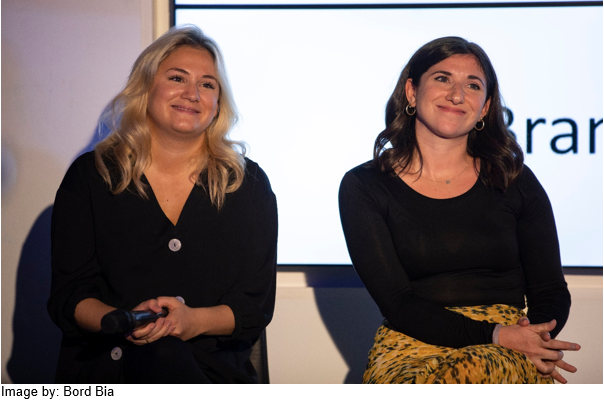
The first presentation for Hippeas, a chick-pea based crisp snack that was only launched in 2016 and already has achieved sales of almost £10m earning the title of the ‘fastest growing snack brand in the UK’. The presentation was given by Miriam Rose, Head of Sales and Sophie Higgins Head of Marketing.
The first point to note about this brand is that it is very carefully targeted at young health conscious consumers looking for plant-based nutrient-dense snacks. Product development therefore took careful account of the latest food trends.
A second point to note is that from the start the brand owners insisted on a premium price. In spite of the obvious risks especially in a time of economic uncertainty there are advantages, a part of the obvious one of greater profitability, in seeking a premium positioning for your brand; it suggests quality and confidence in the product, it provides some protection from retailer pressure and it represents a constant reminder internally to maintain the highest quality standards.
The third lesson is the use of witty sophisticated marketing communications through on-pack copy and social media e.g. Give Peas a Chance, Power to the Peaple. David Abbott, the renowned UK copywriter, once noted that the twenty six letters of the alphabet, carefully used, represent the most unfair advantage you can have over your competitors.Unfortunately too few brands are prepared to risk more creative copy on-pack, on social media and in advertising.
The fourth lesson is the now familiar efforts by so many of today’s successful brands to create a movement, tribe or club atmosphere around their consumers. This creates great loyalty and ‘club’ members act as proselytizers for the brand.
A fifth point to note is that the brand owners paid particular attention to Byron Sharp’s advice to create ‘mental availability’ for the brand as quickly as possible. The very distinctive use of the colour yellow played a large part in achieving this objective. The sixth point, common to many recently established brand successes, is to imbue the brand with a strong sense of purpose from the beginning. This was achieved by a genuine commitment to sustainability, chickpea plants naturally release nitrogen back to the earth they grow and the brand developed a partnership with Farm Africa from the beginning. A further point to note about this brand was that from day one they were determined to become a global brand. We are increasingly seeing this level of ambition in the new wave of food and drink brands aimed at the now mainstream millennial market sector.
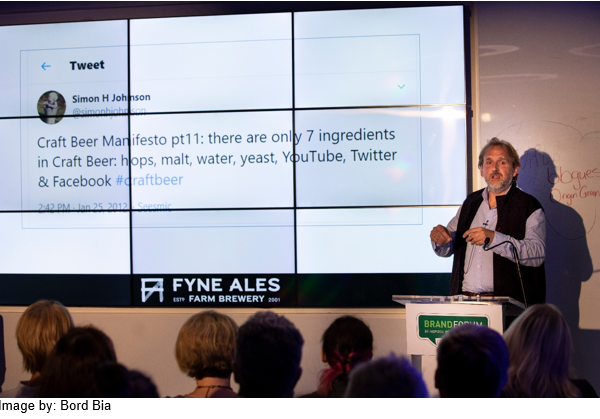
The second presentation was given by Jamie Delap the Chief Executive of a family owned brewery, Fyne ales, in Scotland. The story of this brand has particular resonance for us in Ireland as it is based in a farm in the West Scottish Highlands worked for over one hundred years by Jamie’s family.
The farm is located in an area of great scenic beauty in a landscape shaped by rain. Partly in an effort to provide employment in an area with limited work opportunities Jamie’s family established the enterprise in 2001. In an interesting development which could be emulated by Brand Forum members Jamie travelled the world picking up ideas from other craft breweries, it’s a pretty sociable sector, and also making contacts for sharing the latest ingredients and brewing methods.
There was also an echo of the previous presentation in the creation of a ‘movement’ around the brands initial buyers/supporters which was hugely facilitated by the launch of an annual three day beer festival FyneFest on the farm. This award winning event now attracts over three thousand people. A video of this year’s festival highlights allowed the audience to understand how an event like this could establish intense loyalty to the brand and in the process create a large band of followers to spread the word far and wide.
Apart from the Festival the main marketing communications for the brand are delivered through social media and Jamie amusingly mentioned that there are now seven ingredients in a successful craft beer; hops, malt, water, yeast, YouTube, Twitter and Facebook. However he added the in his experience the heyday of social media effectiveness was in the 2010—2012 period when conversations using these platforms were enthusiastic, frequent and lengthy. The increasing ubiquity of brands seeking attention via these channels is reducing their impact and making communication more standardised and impersonal.
After a decade of steady but slow growth the brand commissioned an ambitious and elaborate positioning study which charted their current position in relation to all beer brands on a spectrum from mass produced high selling popular brands like Carling all the way down to tiny uber-craft hobbyist brands.
They concluded that their relative success had moved the perception a little too far towards the mass brands and briefed a design agency to re-enhance their craft credentials. As a result they settled on three core values to redefine the brand; Roots, Community and Progress. This combination of emphasising local roots, pride in one’s community and ambition to match the best in the world is one that should be studied by all Brand Forum members.
There was much to admire and much to learn from both presentations. These new millennial targeted brands are setting the pace in terms of innovative product development and marketing communications. No wonder the global food and drink behemoths are anxiously looking over their shoulders.