

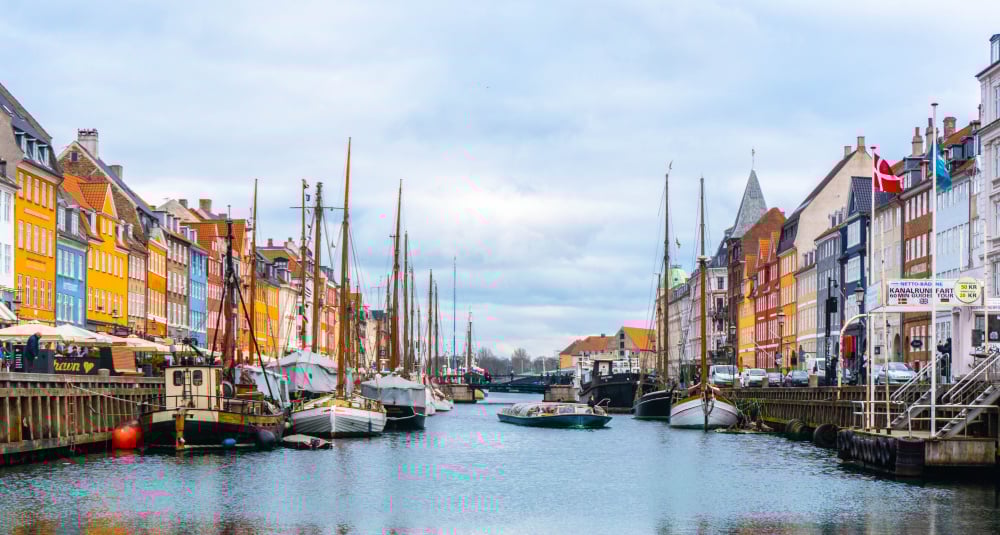
Photo by Ava Coploff on Unsplash
Helen King, Director of Strategic Planning & Insight, Bord Bia – Irish Food Board
During April 2019, we visited Copenhagen to discover the New Nordic Cuisine, learn about market trends & the Danish food culture. Much of what we found out was similar to Ireland, but still loads to learn from them.
We learned that the capital of the world's oldest kingdom has become a cutting-edge city boasting avant-garde design, art and architecture as well as being a 21st century food destination. Copenhagen, a city of just over 500,00 people with more bikes than cars, has gone from what was once a food back water to a food revolution. Started by Noma, voted numerous times the world’s best restaurant that inspired and led to16 restaurants sharing more than 20 Michelin stars between them.
In just 30 years, the culture of food in Denmark has been transformed.
A food culture built on innovation, fresh local seasonal produce and a belief in Nordic food coupled with vision, ideas and talent.
1970/80’s was the era of puritanism, where Danish people believed it was a sin to put much time into cooking or into exploring pleasures of eating. The 1990’s saw an arid culinary landscape and industrialisation of food production. Come the 2000’s, a new Nordic cuisine manifesto was launched - a manifesto urging sustainability, seasonal cooking, the use of vegetables as well as indigenous and local foods, sound animal welfare and a focus on health.
In 2003, Noma-head chefs Rene Redzepi and Claus Meyer led the makings of the movement with their book, a manifesto (below) dedicated to improving food culture in Nordic countries through making use of ingredients from the local region.
Within two years of being released, the book saw governments and businesses taking leadership in their approach to changing food habits across Scandinavia with the ultimate goal of eating more sustainably.
It saw a new wave of restaurants pop up where the focus was on seasonality, vegetables being celebrated, and change was present right down through to the school cafeteria.
René Redzepi - The chef who started a revolution:
"When Noma opened years ago, it was a laughable idea that you could make a gastronomic restaurant with Nordic ingredients: if you were a high-end restaurant you had to have French pigeons; you had to have foie gras; you had to have caviar. To think that you could make a compelling restaurant with the local ingredients that we have here was a joke.”
The New Nordic Cuisine Manifesto
- To express the purity, freshness, simplicity and ethics that we would like to associate with our region
- To reflect the different seasons in the meals
- To base cooking on raw materials which characteristics are especially excellent in our climate, landscape and waters
- To combine the demand for good taste in food with modern knowledge about health and wellbeing
- To promote the Nordic products and the variety of Nordic producers
- To promote the welfare of the animals and a sound production in the sea and in the cultivated as well as wild landscapes
- To develop new possible applications of traditional Nordic food products
- To combine the best Nordic cooking procedures and culinary traditions
- To combine local self-sufficiency with regional exchange of high-quality goods
- To cooperate with representatives of consumers, other cooking craftsmen, agri- culture, researchers, teachers, politicians and authorities on this joint project to the benefit and advantage of all in the Nordic countries
The Manifesto was endorsed at governmental level. The five Nordic nations — Denmark, Sweden, Norway, Finland and Iceland — realised that, besides the prestige value of having top restaurants drawing gourmet tourism to their countries, this new approach to eating can have benefits on many levels: improved health, less spending on medical care, a cleaner environment, more job opportunities outside of urban areas and more vigorous rural communities.
On starting NOMA and Danish food today…
“Danish people for the most part thought it was a joke...when it comes to food we seem to think that everything south of the border is better than what we have ourselves, and I always used to say it is not better but different…
“There has been a big change in our part of the world now, now you can do whatever you want, you can open a restaurant and say I am only going to do a Danish flat bread restaurant and everyone says ‘that is a good idea’.” - René Redzpei