

Michael Hussey, Senior dairy Manager, Bord Bia-Irish Food Board
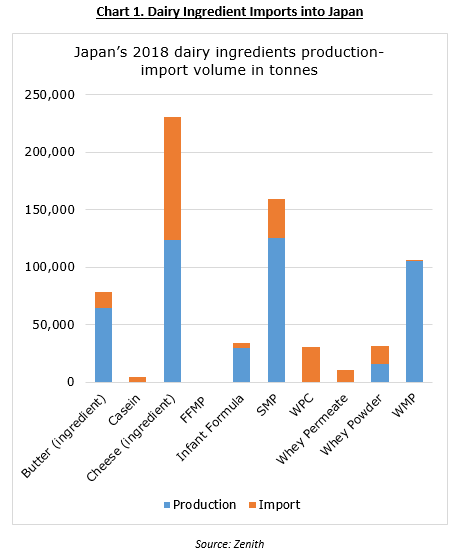
The Japanese dairy ingredients market stood at 676,000 tonnes last year and is growing at a CARG of 1% since 2013. Japan is dependent upon imports for around 40% of its requirements. The market is highly regulated by the Government through state-trading, quotas and tariffs. According to the latest population census, the population of Japan is 127 million and in long-term decline with an ageing population. The Japan- EU economic partnership came into effect in February 2019, and this will see a progressive reduction in tariff levels for imported dairy ingredients over the coming years. Major purchasers are dairy processors, confectionery & bakery manufacturers and increasingly the foodservice channel. Major suppliers to Japan are Australia and New Zealand, along with the US and Europe. As can be seen from Chart 1, cheese as an ingredients was the biggest import followed by SMP. However, WPC, whey and whey permeate are also imported in significant quantities.
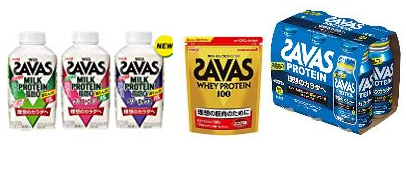
Apart from the opportunities for cheese, there is a growing trend for more protein consumption. According to Health Industry Newsletter in Japan, supported by the growth in the fitness industry there has been strong growth in RTD protein drinks and sports nutrition products. One of the market leaders is “Savas” which is produced by Meiji dairies, and has a number of high protein products under the same brand.
Given that Japan has the most aged population in the world, (33% were over 60 years of age in 2017) there has been a growth in the number of high protein RTD launches in the dairy sector in recent years, aimed at this growing cohort. This is also reflected in the growth in imports of whey, whey concentrates and permeates in recent years which can be used in these product to boost protein levels.
In addition to marketing protein as a functional product within the dairy category, dairy manufacturers are launching dairy products with other functional benefits to a wider range of consumers. The most common functional claims are, around diet, added calcium, eczema, reducing hay fever and lowering cholesterol etc. There has been strong growth in the yogurts and in particular probiotic drinks. This suggests that there may be opportunities for Irish dairy exports to target premium blends for different functionalities to dairy manufacturers and the food industry generally.
Another possible opportunity for growth is in the confectionery sector. Japan is the 6th largest confectionery market in the world. Chocolate is the largest subsector within confectionery followed by sugar confectionery and gum. The consumption of confectionery products in Japan is expected to reach almost €10 billion by 2022.
Japan is the 4th largest retail bakery products market worldwide and the second in the Asia Pacific region. The attitudes and consumption behaviours of the Japanese people make this mature market significantly different from other Asian countries. The industry is showing steady growth supported by factors such as decline of rice consumption. Butter and SMP are common ingredients in bakery and pastry products in Japan. Lactose on the other hand, is often used as sweetener in the production of chocolate and candy.
Within the foodservice channel the QSR sector is growing sales by 2.2% per annum.
This is because consumers feel time-poor and are seeking fast solutions to eating out and certainty about what is on the menu. The channel has a high penetration of chain operators, both local and international operators. Key players include McDonalds Japan, Zensho, Plenus, Duskin and Yum! Brands. There are growing opportunities for cheese in this channel.
Exports of cheese to Japan last year were worth €38 million which was an increase of 46% from 2017. Exports of Milk Protein Concentrate (MPC) and Casein were €2.1 million and €1.3 million respectively last year. There is clearly potential to increase our dairy exports to Japan over the coming years in response to consumer trends, demographics and in light of the reducing tariffs as a result of the new free trade agreement. For Irish exporters it is essential to know who your target customers and end use applications are and to partner with the correct importer/distributor/manufacturer in order to optimise your route to market.
More information on the dairy market in Japan will be available during the upcoming trade mission to Japan and Korea from 10th - 14th June. For further information contact Michael.hussey@bordbia.ie
Selected products under the Savas brand
Sources:
Bord Bia Thinking House- Dairy Ingredients Insights in Japan
Euromonitor Consumer Foodservice in Japan
GlobalData the future of foodservice in Japan
Dairy in Japan- EU-Japan Centre for Industrial Cooperation