

Jane Leydon, Strategic Insight & Planning Executive, Bord Bia - The Irish Food Board

This FoodAlert, which is the second in a series of five, will look at innovations and manifestations of the Engaging Experiences trend within the pasta sauce category as it continues to shape the lives of consumers across the globe (Bord Bia, 2018). It will then conclude with implications for Irish suppliers.
Why Trends Matter:
The Consumer Lifestyle Trends are an important tool because they help Irish suppliers to look forward, ensuring that their strategies remain proactive in the changing landscape. Trends can also act as a catalyst for new thoughts and ideas, providing inspiration for profitable growth.
The Engaging Experiences Trend:
The Engaging Experiences trend identifies increased multiculturalism in urban areas which is leading to innovative food fusions and experimentation with new food combinations. It’s based on growing connectivity and, in certain markets, increased prosperity which are opening up new worlds of experience and excitement to consumers (Bord Bia, 2018).
Manifestations of Engaging Experiences in Pasta Sauce NPD:
1. Food Fusions
Intensifying multiculturalism in urban areas is leading to breakthrough culinary hybrids at both high -end and in the mainstream (Bord Bia, 2018).
Mintel (2019)(1) indicates that flavours inspired by different regions, seasonality and botanical ingredients are currently trending in the category. There is certainly scope to innovate more creatively around flavour profiles and deliver more complex flavours.
Mintel (2019)(1) highlights an increasing number of internationally inspired sauces. Consumers are more open to international sauces, particularly when they are paired with familiar foods. 66% of UK cooking sauce users are encouraged to try cooking sauces from new cuisines (Mintel, 2019)(1).
Ethnic sauces such as Indian, Japanese and Thai are already widely found, therefore there is an opportunity for more regional-specific varieties with distinctive flavour profiles and ingredients (Mintel, 2019)(1). Pasta sauces such as pumpkin and butternut squash and pumpkin-chipotle are available, and while they incorporate highly regional traditional ingredients, they are demonstrations of food fusions that would have been unheard of in supermarkets years ago (Prepared Foods, 2019). Victoria Fine Foods is an 80 year old pasta sauce maker who have introduced food fusions in their pasta sauce line up to include sauces such as avocado oil marinara, chianti marinara, white bean marinara, artichoke alfredo, and an arugula pesto alfredo.
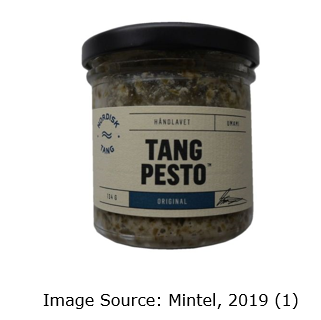
An interesting example of fusion of flavours in this category is the Nordisk ‘Tang Tang Original Seaweed Pesto’, which is made with seaweed harvested on the Nordic coasts and it offers a unique umami taste experience (Mintel, 2019)(1). This is certainly an innovation that could be adopted by an Irish producer, perhaps inspiring a Wild Atlantic seaweed pasta sauce.
Innovation in seasonal-inspired cooking sauces is currently limited and there is an opportunity for brands to formulate with seasonal ingredients to keep consumers engaged all year round (Mintel, 2019)(1). Consumers tend to associate summer food and drink with attributes such as fresh, fruity, tangy and refreshing, and autumn/winter with warmth, comfort and spiced. This indicates the potential to keep consumers engaged all year with the introduction of more limited edition varieties which capitalise on such seasonal sensations (Mintel, 2019)(1).
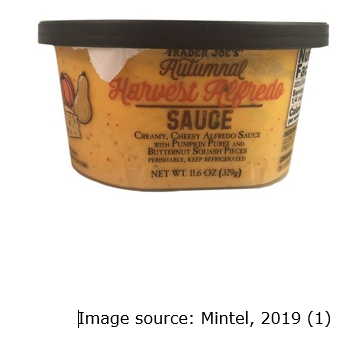
Trader Joe’s have recognised this opportunity and they have introduced an Autumnal Harvest Alfredo Sauce which is made with produce that is ripe during the autumn, like pumpkin puree and butternut squash pieces (Mintel, 2019)(1).
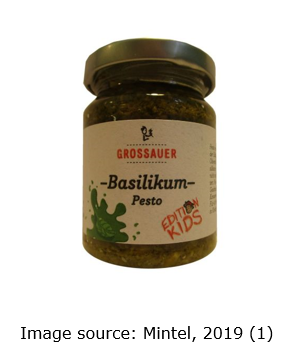
Pesto sauces for kids remains an untapped opportunity, with few brands currently tapping into this space. Interestingly, 52% of French sauce users agree that ethnic pasta sauces tailored for children are a good way to introduce them to new cuisines (Mintel, 2019)(1). One of the few brands who have launched a pasta sauce targeted at kids is Austrian Groussauer who have released a kid’s edition pesto. There is certainly an opportunity to create new pasta sauces which introduce children to global flavours in a way that is tasty and exciting.
2. Sensory Experiences
This involves creating a fully immersive and stimulating experience around food by enhancing moments of consumption and playing with the senses and perceptions of reality. (Bord Bia, 2018) The successful use of multisensory engagement will lead to consumers having a deep emotional connection to the product (FMCG Gurus, 2018). Brands can achieve differentiation by creating texture to enhance the consumer’s sensory experience. An example of a brand who has introduced crunch-enhancing ingredients to their sauce is Gil’s Gourmet with their Parmesan Walnut Pasta sauce (Prepared Foods, 2019).
Consumers are also craving spicy flavours, and the popularity of spicy flavours will continue, with 78% saying that they enjoy at least moderately spicy foods, according to Technomic’s latest Flavour Consumer Trend Report (Prepared Foods, 2016). Heat appears as the most prominent trend in recently launched sauces (Joy and Feder, 2019). In response to this there has been an increase in sauces with ingredients such as jalapenos, aji, armalio peppers and other hot chilli peppers to deliver consumers the heat they crave. (Mintel, 2019)(2).
In particular, foodservice has experienced an increase in spicy sauces on menus. Aji Pepper sauce grew over 300% on menus between 2015 and 2018 (Mintel, 2019). Aji Pepper sauce is an orange chili pepper with a medium to hot heat level which is native to South America. It offers a unique international spin on menus (Mintel, 2019)(2).
A brand which has taken advantage of the increased consumer interest in spicy flavours is Grecian Delight Foods Inc., who have enjoyed success in the US with their Four Pepper Cilantro Sauce. This sauce capitalises on the consumers’ interest in Levantine cuisine. It’s versatile, adds colour and it’s a big global spice that can be used on a sandwich, with seafood, as a pasta sauce or even mixed in with hummus (Prepared Foods, 2019).
3. Story Culture
Story culture focuses on the global proliferation of consumers as storytellers and curators of their day-to-day lives, sharing streams of mini moments with their online networks (Bord Bia, 2018). Consumers are seeking stimulation and engagement in all aspects of their lives and this influences their food and drink choices.
45% of consumers are looking for information and education when it comes to using their sauces (Mintel, 2019)(1). According to a 2018 report by Label Insight and the Food Marketing Institute, 75% of American consumers say they are more likely to switch to a brand that provides more in-depth product information—including details that go beyond that on traditional product labels (Mintel, 2019)(1).
The first article in this series examined the opportunities for health and wellness in the pasta sauce category. It highlighted the potential for pasta sauces to fill the nutritional gaps in a vegetarian or vegan diet. People who are embracing a meat free diet are searching for inspiration and education for creating healthy and vibrant meal options.
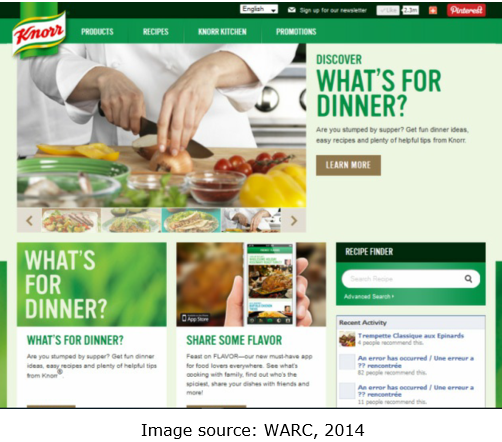
To illustrate, in 2014 Knorr led a campaign in Canada to target mothers of children under 12. This campaign positioned the product as being a solution to the “what’s for dinner?” question, with recipe cards and a mobile recipe app which could be customisable by retailers. Digital ads, websites, email and social media were used to promote the campaign. Users were encouraged to share their pictures of cooking on social media (Warc, 2014).
Knorr, more recently came up with an idea of developing a cooking pal. The cooking pal engages with users through Viber messaging app by sharing ideas and ingredients for the meal ahead. It also includes daily notifications of recipes (WARC, 2019)(1). Heinz similarly engaged with their consumers by introducing a Twitter poll in an attempt to gauge consumer’s interest in their new hybrid ‘Mayochup’ (WARC, 2019)(2).
Implications for Irish Suppliers:
Suppliers need to be aware of new product development arising in this category which is based on food fusions, sensory experiences and story culture. They should be proactive rather than reactive and embrace the engaging experiences trend as a catalyst for growth.
Key Insights and Takeaways
1. Food Fusions
Intensifying multiculturalism in urban areas is leading to breakthrough culinary hybrids at both high-end and in the mainstream (Bord Bia, 2018). Do you have an innovation pipeline which includes flavours inspired by different regions, seasonality and botanical ingredients?
2. Sensory experiences
Creating a fully immersive and stimulating experience around food by enhancing moments of consumption and playing with the senses and perceptions of reality (Bord Bia, 2018). Are you playing to texture and spicy flavours to surprise and delight consumers?
3. Story Culture
Story culture focuses on the global proliferation of consumers as storytellers and curators of their day-to-day lives, sharing streams of mini moments with their online networks (Bord Bia, 2018). Consumers are seeking stimulation and engagement in all aspects of their lives and this influences their food and drink choices. Are you using social media campaigns to increase consumer engagement like Knorr and Heinz?
You may also be interested in part 1 of this series.
Clients of Bord Bia are welcome to make an appointment to come into the Thinking House to explore any of the resources discussed in this article.
References:
- Mintel (2019). A Year of Innovation in cooking sauces and seasonings, 2019. (1)
- Mintel. (2019). What's trending: Sauces, Dips, and Spreads. (2)
- WARC. (2014) Knorr: “What’s For Dinner?” (1)
- WARC. (2019). Knorr Recipe Pal: Bringing Back The Cooking Habit of Filipinos. (2)
- WARC. (2019). Heinz: Mayochup.
- FMCG Gurus. (2018) Exploring Multi-Sensory Marketing Strategies in the global food and drink market
- Engaging Experiences - Bordbia. (2018). Retrieved 2 December 2019,from https://www.bordbiaconsumerlifestyletrends.ie/trends/engaging-experiences/
- Bord Bia Consumer Lifestyle Trends (2018). Retrieved 2 December 2019, from https://www.bordbiaconsumerlifestyletrends.ie
- Tom Vierhile, (2019) Flavor Innovation, Clean Ingredients Boost Spreads, Sauces & Dressings. Retrieved from: https://www.preparedfoods.com/articles/122629-flavor-innovation-clean-ingredients-boost-spreads-sauces-dressings
- Prepared Foods. (2016) Chile-Based Sauces, Ingredients.Retrieved from: https://www.preparedfoods.com/articles/118222-chile-based-sauces-ingredients
- Prepared Foods, (2019) Showcasing Sauces, Dressings and Spreads. Retrieved from: https://www.preparedfoods.com/articles/122309-showcasing-sauces-dressings-spreads
- Joy, M., & Feder, D. (2019). Creative Condiments and Sauces are Making a Splash. Retrieved from: https://www.preparedfoods.com/articles/121947-creative-condiments-and-sauces-are-making-a-splash