

Laura Murray, Market Specialist, Madrid
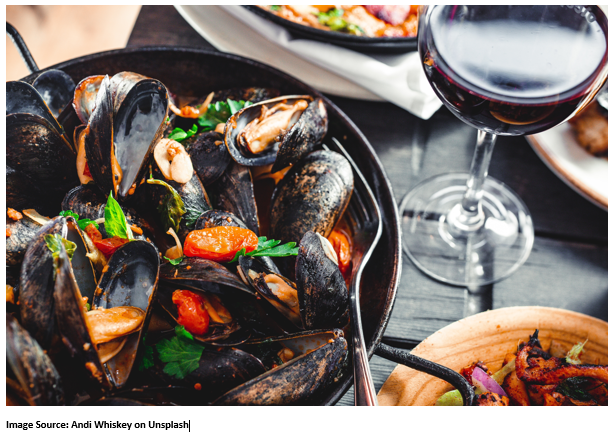
Spain is one of the largest markets for fish and seafood within the EU and the second most important market for Irish fish and seafood in particular. Exports from Ireland to Spain reached approximately €75 million in 2018 (-3% on 2017).
The Spanish Department of Environmental, Rural and Marine Affairs (MARM) highlighted that 12.7% of all spending in Spain is spent in the fish and seafood sector. In comparison to what can be found on most Irish shelves and menus, Spaniards are much more accustomed to rarer types of seafood such as canned ‘calamares’ (squid), fresh ‘pulpo’ (octopus), and ready-to-eat ‘gulas’ (eels).
In general, sales within the seafood market have seen a slight decline, however some sub-sectors, like organic, have shown growth despite the downward trend. Seafood consumption per capita in 2007 was 29.9kgs however this figure decreased to 23.7kgs by 2017 (-7kgs). The drop can be partly explained by the changes in Spanish consumption patterns. Unlike the older segment of the population, where frequent consumption of fish is deeply rooted, younger consumers are eating much less fish and seafood. For example, the way consumers consume smoked fish products is changing, largely due to the “boom” of Asian and Caribbean flavours and plates such as poké bowl. Many poké specific foodservice outlets such as ‘Aloha Poke’ and ‘Tasty Poke Bar’ are popping up across the major cities and a dedicated sushi section has become almost a staple in many major retailers across the country.
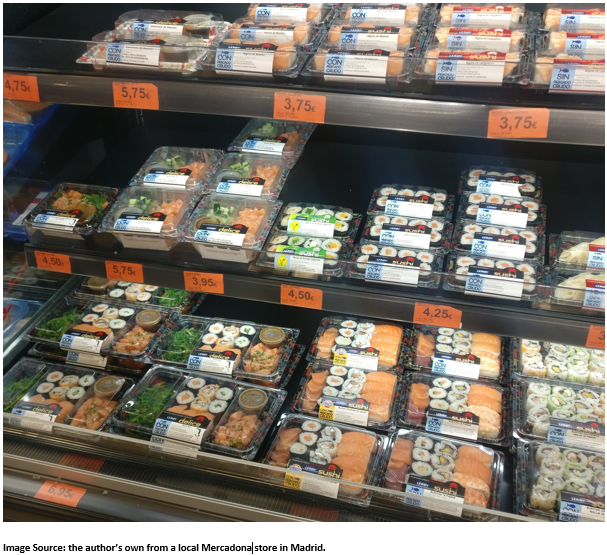
With this in mind, manufacturers have been slowly moving in the direction of offering products with higher added value and differentiation such as ready-to-eat products and bone-free fish. This is part of the strategy amongst key market players to attract younger audiences, who tend to be more reluctant to prepare fish and seafood meals at home.
One of the main producers to pursue this strategy is Pescanova. The company aims to reinforce its position in the retail channel through the development of new ranges adapted to the modern fish consumer, including easy-to-make recipes and even a tapas inspired range with mini hake burgers and shrimp lollipops. Other brands are also using innovation in their packaging to develop easy-open packs and provide microwaveable options for on-the-go consumers and busy families.
Health, sustainability and convenience are three of the top trends making their way through the seafood sector with the objective of reaching the previously mentioned younger, millennial audience. If Irish companies are to compete in the Spanish seafood sector, they should look to incorporate at least 2 of 3 of the aforementioned trends while always aiming to add value to the Spanish consumer.