

Irene Brockie, Düsseldorf Office, Bord Bia – Irish Food Board
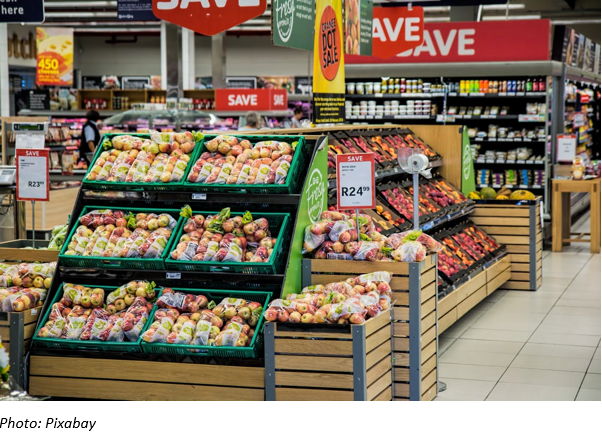
Responding to global demands for more transparent and sustainable methods of food production, several initiatives targeting unnecessary and unrecyclable packaging forms have recently been introduced across the German food industry.
“Golden Vulture” award for the most unnecessary packaging
The environmental aid and consumer protection association Die Deutsche Umwelthilfe (DUH) has opened the first voting phase of its new award, the “Golden Vulture”. As the food industry’s answer to the ‘Razzie’ awards for worst film in Hollywood, the award highlights products available on German supermarket shelves which are wrapped in particularly plastic-heavy, unnecessary and ‘absurd’ packaging. The award aims to hold retailers to account for choosing unsustainable and unnecessary forms of packaging for their products. According to the DUH, the award’s prize is to “increase the pressure on trade, manufacturers and politicians to finally end the one-way plastic flood and either utilise innovative, reusable solutions or dispense with packaging altogether”. Earlier in the summer, consumers sent names of over 200 products to the DUH, so-selected because of their wasteful packaging. The six most frequently mentioned products - including sliced melon, multipack mineral water and individually wrapped treat-sized bags of sweets - made the shortlist.
“The nominated packaging types from Lidl, Nestlé, Haribo and Co. show that manufacturers and traders are still wastefully using limited resources and accepting environmental pollution,” stated the DUH's Managing Director Jürgen Resch. “This competition encourages consumers to intelligently avoid disposable plastic packaging and, where packaging is indispensable, choose reusable solutions that have been employed for centuries by our parents and grandparents.”
Lidl introduces new packaging label for own-brand products
Lidl Germany has introduced a new packaging label for private label products, with the aim of allowing consumers to make informed packaging choices and easily recognise products packaged in previously recycled materials. The new “Responsibly Packed” logo will appear on packaging of both edible and non-food items.
The logo will be printed on packaging that meets at least one of the following criteria: recyclability of at least 80 percent, recycled content of at least 30 percent, innovative use of alternative materials and/or reduction of at least 10 percent in the volume or weight of the packaging material.
The Schwarz Group, comprised of over 3,600 Lidl and Kaufland outlets in Germany, hopes to make considerable reductions to the amount of plastic currently used by the company. “Reset Plastic”, the group’s first ‘anti-plastic’ strategy, aims to reduce plastic usage by 20% and, where necessary, to work exclusively with 100% recyclable plastic packaging by 2025.
References
- https://www.duh.de/goldenergeier/
- https://www.lidl-nachhaltigkeit.de/nachhaltigkeit-bei-lidl/plastikreduktion/
- https://www.lebensmittelzeitung.net/