Lian Enters – Market Specialist Netherlands, Bord Bia – The Irish Food Board
Sustainability and animal welfare have been an increasing focus for retailers during the past years. Pressure from animal welfare groups combined with the consumer’s need to eat more responsibly, contribute to the rise of quality marks. In 2014 the Dutch consumers spent € 1.9 billion on sustainable food with a quality mark, in 2018 this rose to more than €4.1 billion (IRI, 2019)[1]. This article will take a look at the prevalence of quality marks across a number of categories and conclude with possible implications for Irish suppliers.
Meat
The ‘Beter leven’ quality mark, introduced by the Dutch Society for the Protection of Animals, is the largest quality mark in the Netherlands. Food with the Beter Leven one, two, and three star logos account for one third of consumer spending on sustainable food with a quality mark (Wageningen Economic Research, 2018).
The popularity of quality logos has also entered the political sphere. In July this year, there will be a vote on a bill to allow only meat with the Beter Leven quality mark on it to be sold from 2025 onwards. In 2015 a similar bill was proposed, but did not reach a majority of the votes.[2] (Distrifood, 24 June 2019).
Dairy
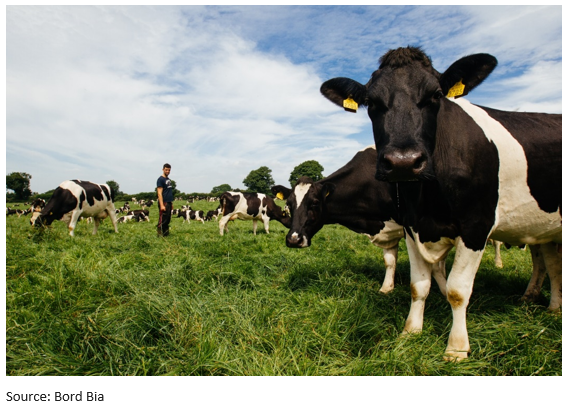
In dairy, the most commonly used quality mark is (‘meadow milk’). To qualify for Weidemelk, cows must be in the field for at least 6 hours a day for 100 days. Retailers are increasingly committing to stocking sustainable dairy - Jumbo, for example, will only stock fresh dairy from pasture milk from 2020 onwards. A Beter Leven certification for dairy was also introduced this year. Jumbo became the first retailer to stock dairy with the Beter Leven quality mark and penetration is growing rapidly.
Fish
In the fish category the MSC- or ASC-mark are on 75% on all products in retail. This is an increase of 5% versus 2018 figures. In frozen fish, almost the entire range (94%) has one of the two quality marks. In canned fish it is 48% and in fresh fish is at 82%[3]. (MSC September 2018)
Possible Implications for Irish suppliers:
Dutch consumers want to have a positive impact on their society and the environment, and take pride in a sustainable way of living. Irish suppliers currently exporting or thinking about entering the Dutch market should dial up messaging which helps show how their products/brands can help Dutch consumers manage the Responsible Living Trend[4]. Quality marks are key. Major retailers demand the availability of quality marks or proof of similar conditions.