

Roisin O’Sullivan – Market Specialist Madrid, Bord Bia – The Irish Food Board
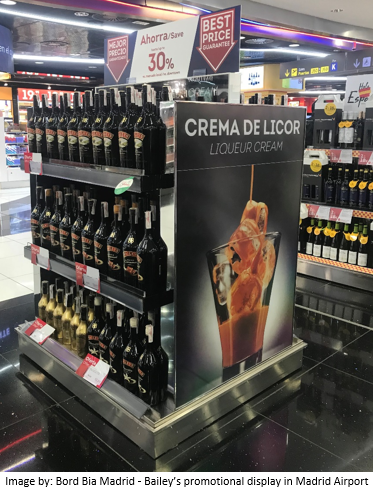
The Spanish cream liqueur category is just one of the many categories that has seen great change in recent years and the need to innovate to stay relevant for consumers who have become increasingly more focused on living healthier lives, reducing their alcohol intake and paying closer attention to the contents and ingredients of everything they consume – allergens, calories, sugar and fat content.
Spain’s cream liqueur mature market has continued to grow in recent years, as albeit reducing alcohol consumption, Spanish consumers when they do choose to drink, now purchase products that they view as premium or higher-quality. Thanks to this trend towards premium drinks in alcoholic beverages, Cream liqueur has grown as it is viewed as a high quality, sophisticated drink.

Furthermore, the occasions when people are consuming cream liqueur have changed. Bailey’s invested heavily in recent years to change the perception of the beverage being only a seasonal product with marketing focused on new recipes, cocktail or coffee mix options creating daily consumption opportunities for after lunch or dinner and on after work occasions.
Diageo-owned Bailey’s is by far the leader with 48% share of the market followed by Pernod Ricard’s Ruavieja with 12.6%. The gap between the two is large, but Ruavieja has been gaining ground in recent years thanks to their local strong marketing campaigns.
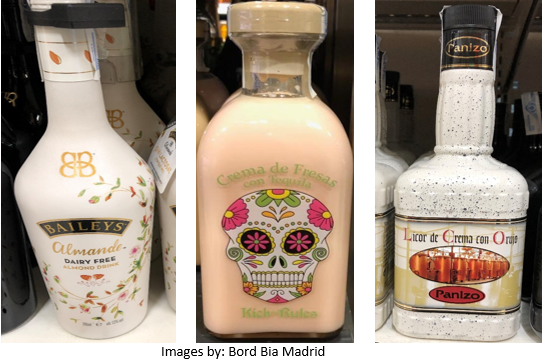
The growing consumer health and wellbeing trend has led to a demand for alcoholic drinks that are free from particular allergens such as gluten, lactose or dairy. In response to this, Diageo recently launched a dairy free, vegan, almond milk version of Bailey’s in the market to target this growing “free from” consumer base.
In the Spanish market, cream liqueurs include not only whiskey based liqueurs, but a large proportion of competitors are using other distilled spirits. Capitalizing on the growing trend for community and identity – producers are innovating with other spirits such as wine, tequila, vermouth, rum, amarula and orujo which is a Spanish traditional liquor obtained from the distillation of marc, the solid remains left after pressing of the grape. All these products appealing to the Spanish and Latin American communities in the market.
The cream liqueur market is expected to continue to grow, however, the growth rate is falling. By 2023, the market will have grown by 4.3%, but it is a mature market with well-established competitors. The health and wellness trend will continue to be a challenge so competitors or new suppliers will need to innovate and continue to invest in marketing to maintain relevant and competitive.
References:
Euromonitor International, ‘Spirits in Spain’. (2019).
IWSR, ‘Domestic Volume Report Spirits Spain’. (2019).
Mintel GNPD, ‘Cream Liqueur Spain’. (2019).
Image by: Bord Bia Madrid.