

4 Key Trends to Understand the Meat Category in Retail
Danny Bowles, International Insights & Planning Specialist
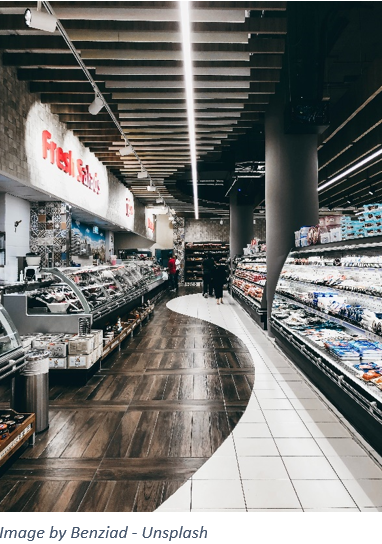
On Friday 21 January, I presented at the Meat Market Seminar on the key trends in European retail in 2021, and what to look for in 2022. In this article, I will sum up some of the big insights from the presentation. The data comes largely from Bord Bia’s Meat Shopper Insight study, an “always on” survey that interviews grocery shoppers across 7 major markets in Europe.
1. The unprecedented values and volumes seen in 2020 were not repeated
2021 saw a drop back in grocery spend against the unprecedented numbers of 2020, but when we compare to 2019 numbers, 2021 looks like a relatively solid year. Consideration (the last time you were shopping for a main evening meal did you consider buying….) of beef, chicken and pork declined versus 2020, but has experienced some growth versus 2019. It’s a similar trend for purchase incidence.
We have repeatedly seen from third party data that growth in retail shot up in 2020, and has slowed again in 2021 (Eurostat, 2021). We also saw this from Nicola Knight, Senior Analyst for Food-To-Go at IGD as she explained at the Seminar the recovery that was seen for the foodservice channel in UK in 2021. As foodservice returns, we would expect fresh food to be the worst hit of the retail food categories as it battles for share of wallet with eating out.
2. Increased focus on sustainability and health impacting meat consumption
However, the data has flagged that the universe of beef buyers is declining; that is to say those who ever consider buying beef. In UK and Ireland especially we have seen a decline in beef consideration as Ireland comes into line with the rest of Europe. This is by no means just confined to red meat; the number 1 reason for reducing beef consumption is a desire to reduce consumption of all meat. The top drivers here are: health, environment, animal welfare and expensiveness. Health and sustainability in general have recently come into sharper focus for shoppers, which is impacting their propensity to buy beef, and meat generally.
But shoppers do still maintain a love of beef, with the vast majority saying it’s worth paying more for and that it’s relatively healthy. The key to keeping shoppers in the category is to assuage their growing fears around the environmental and animal welfare impact of beef production, and to communicate clearly the value of good quality, grass-fed Irish beef. Engage in real sustainable action in production, and continue to care for welfare and be able to communicate this strongly to consumers and trade. By doing so you can give shoppers the licence to indulge in beef.
3. With rising prices there is a need to reinvigorate the meat category
As well as the sustainability pressure coming from consumers, we are seeing across Europe the impact of inflation in retail. Expensiveness is increasing as a barrier to consumption and purchase of beef. Previously, special offers have been absolutely key for catching shoppers’ eyes and giving them licence to trade up and explore the category. Without relying on promotions and low prices, the beef category, and more generally the meat aisles of all supermarkets, need to work harder to increase engagement and increase the price competitiveness. Otherwise, shoppers will tend to choose the most affordable format. Retailers need to think harder about how to improve their presentation of meat in-store, how they can make shoppers feel more excited about what’s on offer and provide them the inspiration they’re clearly looking for.
There is clear evidence shoppers are looking for something new in their repertoire, whether that’s new cuts, new flavours, new ways of presenting what is already on offer. From a value and engagement point of view, there is a necessity to reimagine ranges and formats across categories. Currently, lamb is benefitting from this desire for a change, with consideration of lamb increasing among shoppers, while consideration of all other categories is declining.
4. Use Irish & Grass-fed to reinvigorate
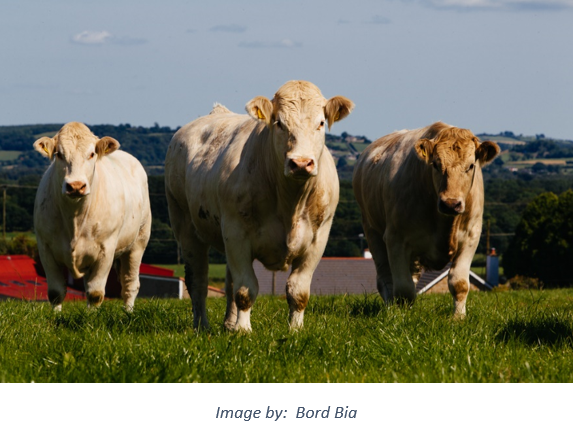
Irish beef producers have a couple of great attributes that we can point to help solve that need for reinvigoration. Grass-fed remains a key signifier of better quality beef in all markets. It’s also synonymous with sustainability for the beef shopper according to our Global Sustainability Outlook research from 2021, when grass-fed was the sustainability attribute beef shoppers were most likely to pay a premium for globally. Thanks to the Grass-fed Standard, we can point to clear proofpoints around grass-fed that other origins cannot do at such a scale.
Added to that, there is consistently strong interest in Irish versions of key cuts, with Irish steak holding strong appeal in Mainland Europe; 1 in 2 beef shoppers in Italy, Germany, UK and Belgium want to see more Irish steaks on shelf. Bord Bia’s Noreen Lanigan (Regional Manager Europe and North America) and Emmet Doyle (Market Specialist for Meat, UK) also presented at the Seminar and presented some insights from the UK, Germany and Italy suggesting preference and awareness for Irish beef is increasing in these key markets as our market teams drive home those key messages related to Irish beef (Bord Bia, 2022). Early evidence from beef taste tests being conducted in a number of markets also suggest strong performance from Irish grass-fed beef with consumers. We can capitalise on this, and leverage our proofpoints around naturalness, taste, sustainability and welfare.
While there are some negative trends we must continue to follow in 2022, there is plenty to also be positive about. Our Meat Shopper Insights study continues all-year around studying key retail rends. We would encourage you to get in touch if you want to know more about the project and request bespoke data. Of course, the foodservice channel will also be a key area of focus as it returns to near its full strength in 2022. We are currently conducting multiple studies into his channel across key markets to better understand foodservice innovation and development in 2022.
Bord Bia. 2021. Meat Shopper Insight Tracker.
Bord Bia. 2021. Global Sustainability Outlook. https://www.bordbia.ie/industry/insights/global-sustainability-insights/
Eurostat. 2021. Turnover and volume of sales in wholesale and retail trade.