

Will UK consumers be eating in more by choice or necessity?
John Tobin, Data & Market Intelligence Specialist
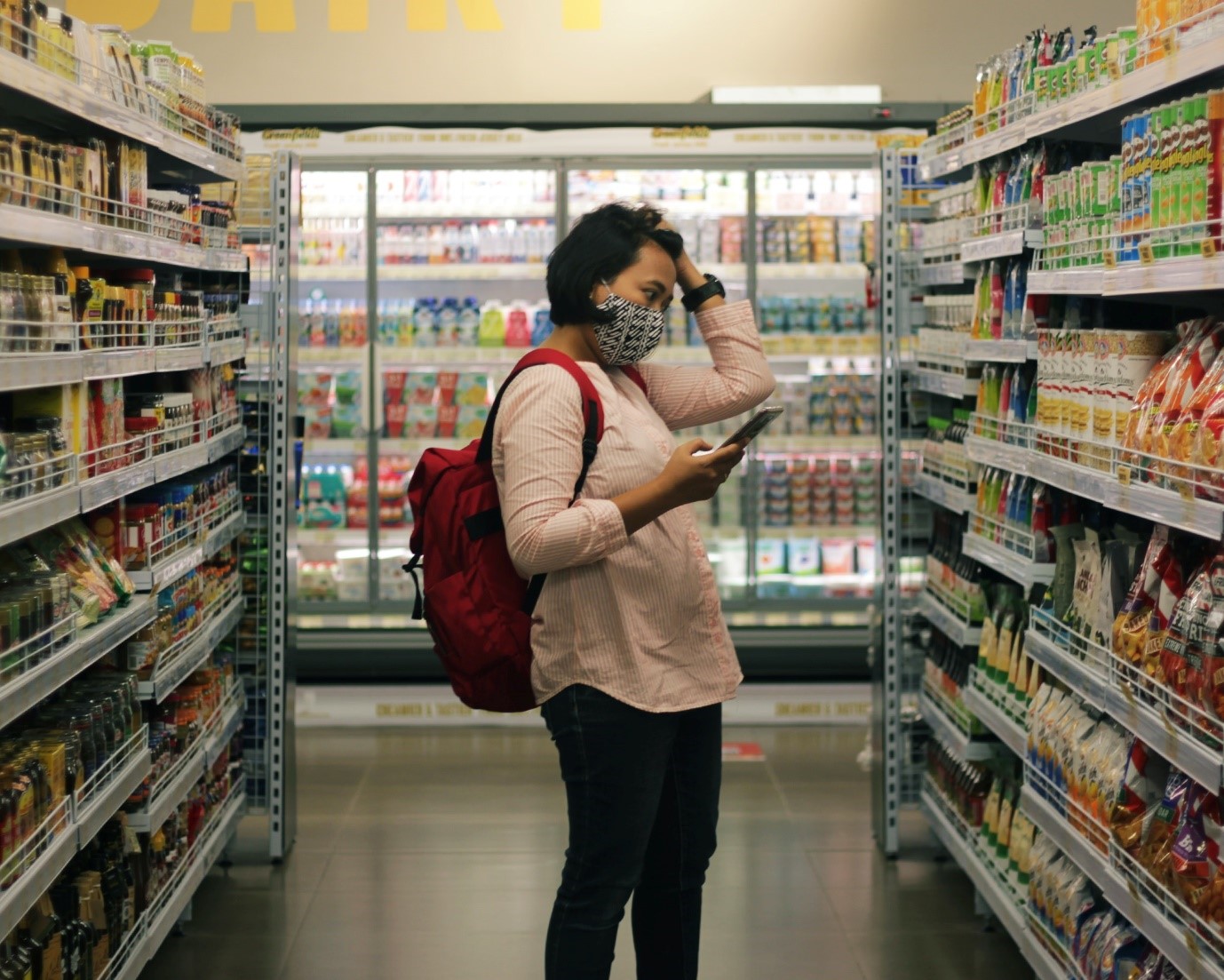
Photo by Viki Mohamad on Unsplash
The arrival of COVID 19 resulted in some significant changes to peoples’ lives in terms of how or where they worked to how they socialized or lack thereof. Food consumption patterns were also subject to change. With the relaxation of restrictions in recent months raises the question of how consumers will behave going forward? Will it be a continuation of lockdown food consumption patterns or is there a correction likely?
A recent presentation by Kantar World Panel aimed to address this question and concluded that compared with 2019, UK consumers are now less social, snack more frequently and consume more food in front of a screen. It was also noted that when households do consume food, a greater proportion of the household are present for such occasions than before. With regards to eating outside of the home, the spend at restaurants and cafés was 31% lower for the 8 weeks ending Dec 26th 2021 compared with the same period in 2019. This coincides with takeaway or delivery seeing an 87% increase over the same period (Kantar, 2022).
Inflation was also highlighted as a potential source of strain on personal finances which may be contributing to their decision to eat out less. By the end of 2021 the proportion of households that consider themselves to be struggling financially had increased by 4% relative to May of the same year (Kantar, 2022). The GFK Consumer Confidence Index which suggests that UK consumer confidence has been deteriorating throughout the beginning of 2022, with the UK government expecting a decline in living standards this year not seen since the 1950’s ("UK consumer confidence slides as inflation and war worries mount - GfK", 2022). If consumers have less disposable income, they may be forced to be less indulgent when it comes to their expenditure on food. A report by Fitch solutions outlined that due to high inflation in 2022 along with an increase in the national insurance contribution rate (1.25 percentage points) both of which will erode UK consumers’ purchasing power. Hence it is expected discount stores may be able to increase their market share in 2022 as demand for lower priced groceries increases (Fitch Solutions, 2022).
Overall, despite the relaxation of restrictions in the UK, by the end of 2021 consumers had not fully returned to their pre pandemic food consumption habits and the current inflationary pressures may help to exasperate this. The current inflationary environment, may also force people to adjust their behavior once more if personal finances come under financial strain. For retailers, restaurants and other businesses involved in selling food to consumers one of the challenges will be to retain their customers and offer products and/or experiences that are aligned with consumers’ budgets in the current environment. Irish food and drink suppliers will need to be aware of these pressures faced by their customers and communicate how their product offering can address these challenges and in some cases product offerings may need to be adjusted in order to remain appealing to customers.
References:
Fitch Solutions. (2022). High Inflation To Increase Demand For Discount Retail In UK Over 2022 (p. 1). Fitch Solutions. Retrieved from https://app.fitchconnect.com/article/BMI_110F7D56-EE31-46BE-8692-86B04151A44F
Kantar. (2022). UK FMCG market update (pp. 7-9,16). Kantar.
UK consumer confidence slides as inflation and war worries mount - GfK. Reuters. (2022). Retrieved 5 May 2022, from https://www.reuters.com/world/uk/uk-consumer-confidence-slides-inflation-war-worries-mount-gfk-2022-03-25/.