

Consumer and Industry Reaction to Food Waste
Written by Amy Bond, Assistant Librarian, Bord Bia
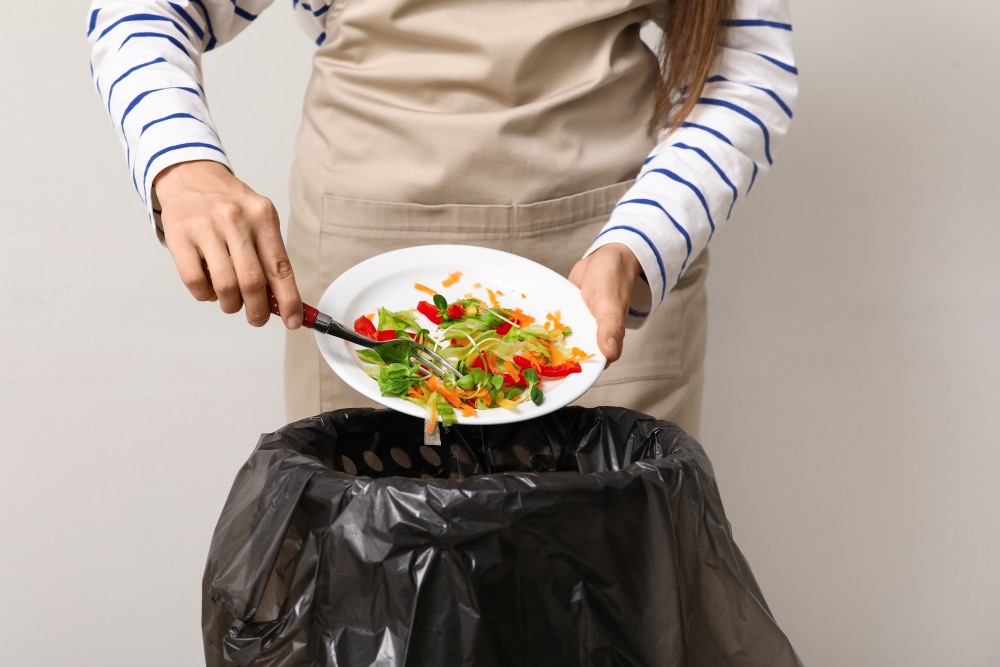
A recent Hot Topic report from Bord Bia’s Knowledge and Market Intelligence team explores the issue of food waste across the global food and drink industry. This report was based on extensive desk research using resources from our library collections. We have refined this research down to a succinct report that provides an overview of the scale of the food waste challenge and how consumers and industry are responding to it.
Scale of Challenge
It is impossible to be exact in putting a figure to the amount of food wasted globally. There is not strict definition of what food waste is (Ouro‐Salim and Guarnieri, 2021), and the data available globally varies in quality (Think Eat Save, 2024), but it is universally acknowledged that it is a hugely significant amount. Some sources estimate that as much as a third of all food produced globally is wasted. When looked at by sector this is 45% of fruit and vegetables, 35% of marine food, 30% of cereals, 20% of dairy products, and also 20% of meat (Ouro‐Salim and Guarnieri, 2021). While this waste is of major concern in itself, and especially in a world where many still go hungry, it also has an environmental impact, with food waste thought to account for 8% of emissions globally (Think Eat Save, 2024).
Institutions around the world are making commitments to address the problem. Many of these explicitly adopt the goal set out by the UN in their Sustainable Development Goals to halve food waste by 2030. For example, the EU’s Farm to Fork Strategy, which is part of the European Green Deal (De Jong et al., 2023). In Ireland, the National Food Waste Prevention Roadmap sets out a national plan to manage our food waste, committing to establishing a baseline of national data from which there will be a 50% reduction in waste (Pathways to Food Waste Prevention, 2023).
Consumer Attitudes
These ambitions are trickling down to both consumers and industry. A 2022 survey of European consumers found that 60% felt guilty about wasting food (Burrows, 2023). In Bord Bia’s Sustainable Nutrition report it came out on top of a list of sustainability issues in the food sector, with 71% of respondents across markets seeing it as important. However, there is also a tendency to see other consumers are being responsible for the majority of waste. With the majority of waste occurring at the consumption stage, without strong action from households, it is unlikely that there will be a real shift in trends.
Industry Response
However, industry does also bear a significant proportion of the responsibility in tackling the problem, and we are seeing creative and impactful responses across the supply chain. Across all industries, technology is helping companies measure where waste is occurring and identify how it can be avoided. Producers are rescuing waste from occurring at production and turning it into new products. AI is helping retailers implement dynamic pricing on shelf to automatically reduce prices on products nearing sell-by dates. Foodservice operators are redistributing surplus to those who need it. Industry players also have a role to play in influencing changes in consumer behaviour, and there are examples from retailers, charity organisations, and food brands in making real impact on levels of household waste.
Collaboration
While all the initiatives discussed above are worthwhile and make a difference in addressing the problem of food waste, it is also clear that there is only so much that can be done by discrete aspects of the food system acting on their own. A report from the United Nations Environment Programme states that the best solution to the crisis is Private-Public Partnerships which bring together solutions from across the supply chain and from government bodies and NGOs (Think Eat Save, 2024). European Commission research has also found that these multistakeholder initiatives are best placed to deliver the multilevel approaches needed to be effective (Swannell et al., 2023).
Conclusion
While the challenge of food waste is stark and appears at times insurmountable, there is hope to be taken from the individual and collaborative rsponses outlined above. Bord Bia will continue to support our client companies in achieving their ambitions in this area. You will find guidance in our Pathways to Food Waste Prevention report. We hope our Hot Topic report will also provide insight and understanding into a complex issue. Bord Bia clients can access the full report on the My Bord Bia platform - click here to learn more.
References
Burrows, D. (2023). Optimism emerges in grim fight against food waste. GlobalData.
De Jong, B., Boysen-Urban, K., De Laurentiis, V., Philippidis, G., Bartelings, H., Mancini, L., Biganzoli, F., Sanyé Mengual, E., Sala, S., Lasarte López, J., Rokicki, B. and M’barek, R. (2023). Assessing the economic, social and environmental impacts of food waste reduction targets. European Comission.
Ouro‐Salim, O. and Guarnieri, P. (2021). Circular economy of food waste: A literature review. Environmental Quality Management. doi:https://doi.org/10.1002/tqem.21836.
Pathways to Food Waste Prevention. (2023). Bord Bia.
Swannell, R., Bruns, H., Bruggemann, N. and Casonato, C. (2023). Evaluation of Consumer Food Waste Prevention Interventions. European Commission.
Think Eat Save:Tracking Progress to Halve Global Food Waste. (2024). United Nations Environment Programme.