

What can we learn from the 2024 Olympic Games? 4 Lessons for Irish Producers
Juliette Murphy, International Graduate, Paris Office
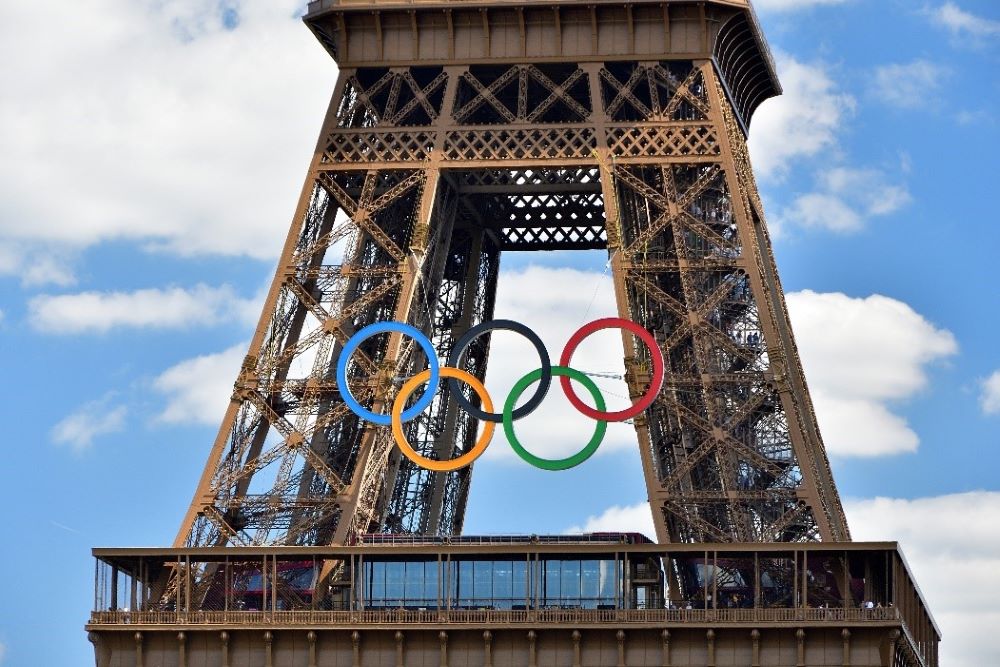
Image source: Shutterstock
Introduction
This summer in France, the Paris 2024 Olympic and Paralympic Games hosted athletes, volunteers, media and spectators from all over the world. In the Paris region alone, between July 23rd and August 11th, over 11.2 million tourists visited Olympic-related events (Le Figaro, 2024). Thanks to France’s strong gastronomic tradition, they expected to eat well!
At the Olympic Village, we would find the “largest restaurant in the world”. Managed by Sodexo Live, this restaurant had 3,500 seats and served 40,000 meals per day, primarily for athletes (Les Echos, 2024a). At sports sites, event organisers were met with the logistical challenge of catering to millions of people’s dietary demands. The goal to limit the environmental impact of the Paris 2024 Games added to the complexity of this feat.
This article highlights key takeaways from the 2024 Olympic Games in relation to food and drink. It summarises the official International Olympic Committee’s food strategy, discusses consumer dynamics, and explains why some foodservice operators outperformed others, and which products sold the most. For exporting Irish food and drink producers, it provides insight into the how large international events impact the food and drink industry. These learnings could be applied to future events, for example, music festivals, international conferences, and other sporting tournaments, to understand what opportunities and limitations may exist.
The Paris 2024 Food Vision
In organising the 2024 Olympic Games, France prepared to welcome the whole world à table. Overall, the Paris 2024 Food Vision for the games was to provide an indulgent food offering, while committing to more plant-based, local and sustainable food (Olympics - Paris 2024, 2024). This strategy applies to official catering at the Olympic village, media centers and sports arenas during the 4 weeks of events.
Some of the Food Vision’s goals include:
- Halving the carbon footprint of meals and snacks;
- Halving the quantity of single use plastic associated with food consumption;
- Doubling plant-based food;
- Ensuring 80% French origin;
- Ensuring 30% organic food (Paris 2024 Food Vision, 2024).
100% of meat, 100% of dairy products, and 100% of eggs (free-range) were of French origin. Certainly, the “Mangez Francais” slogan (meaning “Eat French”) endorsed by French farmers across the country’s motorways in early 2024 was respected. Additionally, a recipe from every French region was included in menus, to promote the savoir-faire and flavours of French cuisine.
For the first time in Olympic history, there was a fully vegetarian competition site, at Place de la Concorde, Paris. Restaurants and bars on this site offered a variety of snacks and meals, including meat-free hot dogs and sandwiches. In football stadiums, the catering committed to providing 40% plant-based food. According to Philipp Wurz, the Paris Games’ Head of Food, this catering offering aligned with the Games’ overarching goal to halve carbon emissions compared to previous Olympics in Rio and London (BBC, 2024), proving that major global events can be important actors in the food transition.
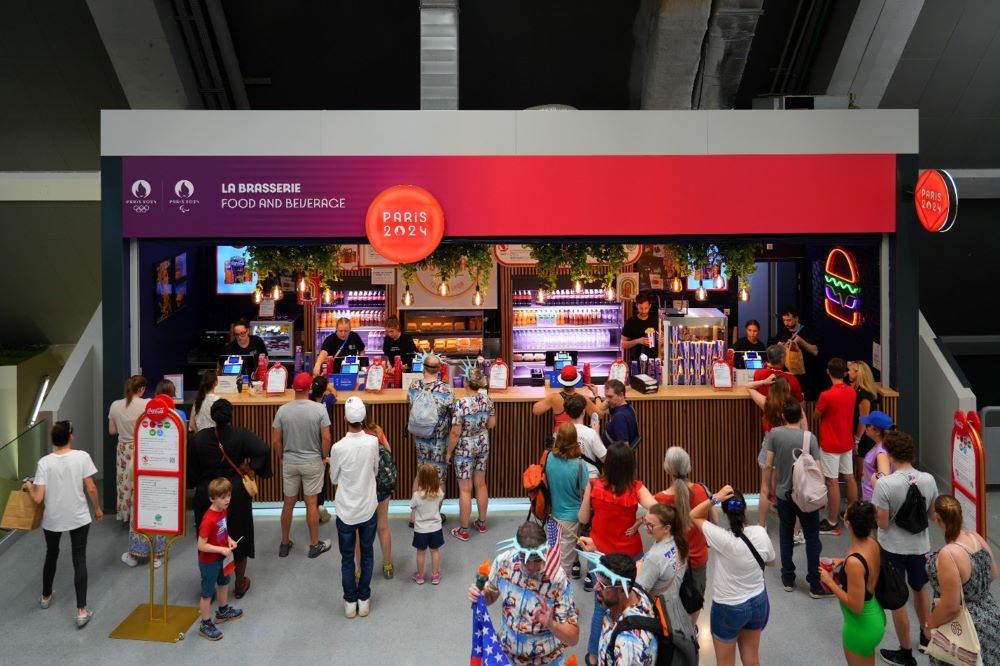
Image source: Shutterstock
Retail and Foodservice: The Winners
Beyond the official Olympic catering, retailers and foodservice operators in host cities welcomed tourists through their doors, albeit, to varying extents.
Convenience stores, brasseries, and street kiosques located near competition sites or fan zones performed best (Les Echos, 2024b). Similarly, restaurants in trains stations and airports benefitted from the sports events. According to the FinTech SumUp, during the 2 weeks of the Olympic Games, compared to the same period the previous year, volumes of sales rose by 18% for food trucks (82% in the Paris region), and by 4% for café-restaurants (42% in the Paris region) (Neo Restauration, 2024).
… and the Losers
Meanwhile, only 10% of independent restaurateurs believe they experienced a positive effect from the Olympics (Les Echos, 2024b). Indeed, chain restaurants were popular among tourists that were on-the-go. Furthermore, a significant proportion of food and drink consumption took place in sport arenas, as the Olympics attracted a different clientele to the usual French tourism, one which did not want to leave the atmosphere of the stadiums (Les Echos, 2024b).
In addition, to ensure smooth organisation and safety of the Games, French public authorities took measures to restrict access to certain zones and roads in Paris, particularly during the seven days before the Opening Ceremony (Zepros, 2024). This placed some restaurants behind barriers, posed limitations on circulation, and prompted a reduction of in-person corporate activities. During this period, some establishments in these areas experienced a drop in sales of 50 - 70% (Les Echos, 2024b), and some restaurant-owners stated that they had not received sufficient warning about these restrictions (France Info, 2024). Professionals that suffered economic damage may be entitled to compensation, and applications can be made to the French Ministry of Economy in early 2025 (Zespros, 2024).
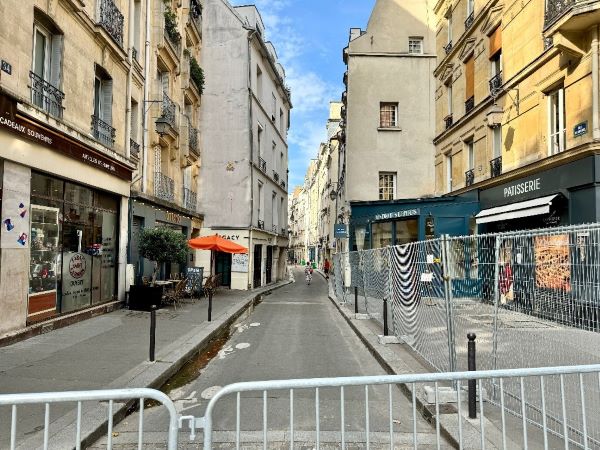
Image source: Shutterstock
The Effect of Population Dynamics
We can further understand why some businesses outperformed others during this summer period by considering people’s lifestyles during this period.
Firstly, many locals left Paris during the Olympics, fearing the chaos of the city. Accompanied with the rise in work-from-home for those that remained, this reduced consumption near workplaces from the normally reliable client-base of office workers.
Outside of work and in their free time, just eight percent of French people went to cafés and restaurants to watch sports events, and those who did mainly consumed drinks (Les Echos, 2024c).
Let’s consider the Olympic Games Opening Ceremony, which would be watched by three quarters of consumers. Overall, 50% of Gen Z consumers intended on watching the event outside the home – in cafés, bars, fan zones or the quays of the Seine - compared to 27% of the average consumer (CGA by NielsonIQ, 2024). This preference of younger generations to socialise outside the home during key sporting events may contribute to their propensity to spend on food and drink.
Fan Favourites Products
After the heavy rainfall of the Opening Ceremony, the good weather in France during the Olympic period had a strong influence on the types of products that were purchased. At the top of the podium were beverages and snacking products.
The product that was purchased the most was still water, followed by sparkling non-alcoholic drinks (sodas), followed by still non-alcoholic drinks (Les Echos, 2024d). Other products that saw significant growth in sales include beers, salads, ice creams, yogurts and salty snacks for aperitifs. A recent study by NielsonIQ indicated that as much as 81% of the additional units sold were products that were influenced by the weather (Réussir Les Marchés, 2024).
This demonstrates consumers’ demand for convenient and refreshing food and drink options, due to heat of French summer, and the fast-paced commute between various sports sites.
Conclusion
The learnings from the 2024 Paris Olympic and Paralympic Games provide valuable lessons to Irish food and drink producers. If your ambition is to be a supplier for a future major international event, this article has discussed 4 key points that you should consider:
- Be aware of the strategic mission of event organisers, to understand where opportunities exist within official event catering.
- Consider what channels to target within foodservice or retail, and prepare for any restrictions on business.
- Think about population and tourist dynamics to anticipate likely consumers.
- Confirm that your product sits within an in-demand category for the event.
References
BBC (2024). The race to plant-based food: How the Paris Olympics became the most vegan ever. Available at: https://www.bbc.com/future/article/20240808-vive-la-vegan-the-paris-olympics-race-to-meat-free?utm_content=303940878&utm_medium=social&utm_source=linkedin&hss_channel=lcp-3244592
CGA by NielsonIQ (2024). Rapport « pulse » sur la consommation des français en CHR, Mai 2024. Available at: https://nielseniq.com/wp-content/uploads/sites/4/2024/07/OPULS-Pulse-France-May-2024-FR-VERSION.pdf
France Info (2024). Paris 2024 : baisse de fréquentation de "-30 %" à "quasiment -60 %" chez les restaurateurs, selon Thierry Marx, président de l'Umih. Available at: https://www.francetvinfo.fr/les-jeux-olympiques/paris-2024-baisse-de-frequentation-de-30-a-quasiment-60-chez-les-restaurateurs-selon-thierry-marx-umih_6680520.html
Le Figaro (2024). JO Paris 2024 : 11,2 millions de touristes ont visité la capitale en trois semaines. Available at: https://www.lefigaro.fr/conjoncture/jo-paris-2024-11-2-millions-de-touristes-ont-visite-la-capitale-en-trois-semaines-20240812#:~:text=Selon%20un%20premier%20bilan%20de,juillet%20et%20le%2011%20ao%C3%BBt
Les Echos (2024a). JO de Paris 2024 : la cantine des athlètes, le plus grand restaurant du monde. Available at: https://www.lesechos.fr/weekend/business-story/jo-de-paris-2024-la-cantine-des-athletes-le-plus-grand-restaurant-du-monde-2109945#:~:text=Enqu%C3%AAte-,JO%20de%20Paris%202024%20%3A%20la%20cantine%20des%20athl%C3%A8tes%2C%20le%20plus,et%20un%20vrai%20d%C3%A9fi%20logistique
Les Echos (2024b). Un été décevant pour la restauration. Available at: https://www.lesechos.fr/industrie-services/tourisme-transport/un-ete-decevant-pour-la-restauration-2116026
Les Echos (2024c). Restaurants: ceux qui modèrent les additions, et ceux qui continuent d'augmenter les prix. Available at: https://www.lesechos.fr/industrie-services/tourisme-transport/restaurants-ceux-qui-moderent-les-additions-et-ceux-qui-continuent-daugmenter-les-prix-2119928
Les Echos (2024d). Les JO ont plus dynamisé les ventes alimentaires à Paris qu'à Londres. Available at: https://www.lesechos.fr/industrie-services/conso-distribution/les-jo-ont-plus-dynamise-les-ventes-alimentaires-a-paris-qua-londres-2114257
Neo Restauration (2024). L’Ile-de-France, grande gagnante des JO. Available at: https://www.neorestauration.com/article/l-ile-de-france-grande-gagnante-des-jo,72308
Olympics - Paris 2024 (2024). Une alimentation gourmande, plus locale, plus végétale pour les jeux. Available at: https://olympics.com/fr/paris-2024/nos-engagements/environnement/vision-de-l-alimentation
Paris 2024 Food Vision (2024). Paris 2024 Food Vision: Celebrating the Modern taste of France. Available at: https://medias.paris2024.org/uploads/2023/03/Paris2024-BIL-230313-FOOD-VISION-Eng-BDEF2.pdf
Réussir Les Marchés (2024). Jeux olympiques Paris 2024 : la GMS marque des points. Available at: https://www.reussir.fr/lesmarches/jeux-olympiques-paris-2024-la-gms-marque-des-points
Zepros (2024). Préjudices économiques occasionnés par les JOP de Paris 2024 : comment être indemnisé ? Available at: https://resto.zepros.fr/actus-metiers/prejudices-economiques-occasionnes-jop-paris-2024-comment-etre-indemnise?utm_source=dialoginsight&utm_medium=email&utm_campaign=NL%20Zepros%20Resto%2028%2f08%2f24&oft_id=76875258&oft_k=zDHszASU&oft_lk=17IFE2&oft_d=638604538723400000